Guide
How to Plan a Wedding on a Budget in 2026 (Without
By Sophie Clarke, Certified Wedding Planner · Updated 2026-03-11
You don't need $35,000 to have a beautiful wedding. Couples who plan strategically — choosing where to save and where to spend — regularly host stunning weddings for $10,000-$20,000 by making smart substitutions, negotiating effectively, and using the right planning tools to prevent budget creep. The key isn't cutting corners; it's knowing which corners don't need to be expensive in the first place.
The average U.S. wedding cost in 2026 is $35,000. That number makes many couples feel like they need to choose between going into debt or having a "lesser" wedding. Neither is true.
The $35,000 average is inflated by luxury weddings and expensive metro areas. The median wedding cost is closer to $28,000, and plenty of beautiful, memorable weddings happen at $10,000, $15,000, or $20,000. The difference isn't quality — it's strategy.
This guide covers specific, proven strategies for reducing wedding costs in every major category without sacrificing the things that actually matter to you and your guests.
Table of Contents
- Set Your Real Budget First
- The 3 Things Guests Actually Remember
- Venue Savings: $2,000-$8,000
- Catering & Bar Savings: $2,000-$6,000
- Photography & Video Savings: $500-$2,000
- Flowers & Decor Savings: $500-$3,000
- Attire & Beauty Savings: $500-$1,500
- Stationery & Invitation Savings: $200-$800
- Music & Entertainment Savings: $500-$2,000
- The Tools That Prevent Budget Creep
- Sample Budgets: $10K, $15K, $20K, $25K
- FAQ
- Sources & Methodology
Set Your Real Budget First
Before you save a single dollar, you need to know what your total budget actually is. Not what you hope it is, not what Pinterest says it should be — what you can actually afford.
Step 1: Calculate Your Available Funds
Add up:
- Your current wedding savings
- Monthly amount you can set aside between now and the wedding
- Confirmed family contributions (confirmed, not assumed)
Do NOT include:
- Expected wedding gifts (you can't spend money you don't have)
- Credit card limits
- Loans you'd need to take out
Step 2: Set a Firm Number
Write this number down. Put it at the top of your budget spreadsheet. This is your ceiling. Every decision that follows works within this number.
Step 3: Allocate With a Buffer
Take your total budget and set aside 10% as a contingency fund. Your planning budget is the remaining 90%.
Example: Total budget is $20,000. Contingency: $2,000. Planning budget: $18,000.
That contingency fund isn't for upgrades. It's for the inevitable surprises — the overtime fee you forgot, the table linens the venue doesn't include, the postage that costs more than you expected. For a complete list of hidden costs, see our wedding budget guide.
Step 4: Decide What Matters Most
Here's the most important budget conversation you'll have: What are the 2-3 things that matter most to you?
For some couples, it's incredible food and an open bar. For others, it's stunning photography or a live band. For others, it's the venue itself.
Allocate 60-70% of your planning budget to your top priorities. Save on everything else. This is how budget weddings feel expensive — they concentrate spending where it has the most impact.
The 3 Things Guests Actually Remember
After attending hundreds of weddings (professionally and personally), I can tell you that guests consistently remember three things:
1. The Food and Drinks
Guests remember whether they were hungry, whether the food was good, and whether drinks were flowing. They don't remember whether the napkins were linen or paper, or whether the centerpieces were $75 or $250.
Budget priority: Medium to high. Don't cut catering to the bone. Do find smart ways to reduce per-person costs (more on this below).
2. The Energy and Atmosphere
Was the music good? Did people dance? Was the couple happy? Did the event feel warm and welcoming? These are the emotional memories guests carry. A DJ who reads the room well creates a better experience than a mediocre band that cost three times as much.
Budget priority: Medium. A good DJ is worth paying for. Elaborate lighting and decor are nice but not necessary.
3. The Couple's Joy
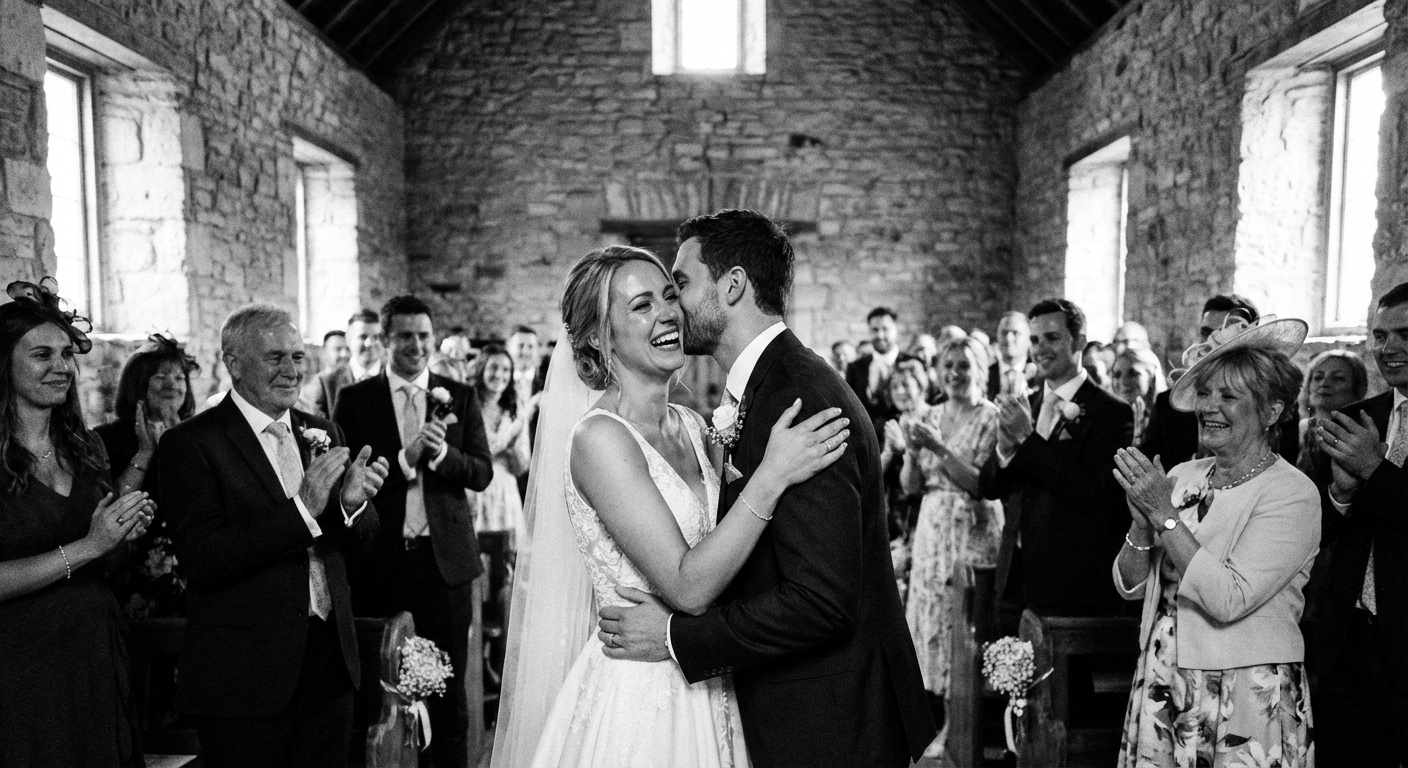
Guests remember how the couple looked at each other, how they danced, and whether the event felt like "them." No amount of expensive decor compensates for a stressed-out couple who overspent and can't enjoy their own wedding.
Budget priority: Priceless. Plan a wedding you can afford and you'll actually enjoy the day.
What guests DON'T remember: chair covers, napkin rings, custom cocktail napkins, elaborate ceremony programs, expensive favors, the specific flower varieties in centerpieces, or whether the cake was fondant or buttercream.
Save your money where it doesn't register in anyone's memory.

Venue Savings: $2,000-$8,000
The venue is typically 25-30% of total wedding costs. It's also where the biggest savings are available.
Choose a Non-Saturday Date
Saturday weddings are the most expensive. Moving to a Friday evening or Sunday afternoon can save $1,000-$5,000 on venue rental alone, plus lower rates from photographers, DJs, and other vendors who charge weekend premiums.
Friday evening is the best budget option — guests can still attend without taking time off work, and the "Friday wedding" stigma has largely disappeared (especially post-pandemic).
Consider Non-Traditional Venues
Traditional wedding venues (ballrooms, estates, dedicated event spaces) charge wedding premiums. Non-traditional venues often offer the same space for less:
- Restaurant private dining rooms: Food and venue in one cost, often with no rental fee
- Public parks and gardens: Permit fees of $100-$500 vs. $3,000-$10,000 for a private garden venue
- Community centers and social halls: $500-$2,000 rental
- Family property: Free venue, though you'll need to rent everything else
- Breweries and wineries: Often include tastings and lower bar costs
- Art galleries and museums: Some offer off-hours event rental at reasonable rates
Go Off-Season
Peak wedding season (May-October) commands premium pricing. November-March (excluding December holidays) is significantly cheaper. January and February are the most affordable months for venues, with discounts of 20-40% compared to summer rates.
All-Inclusive vs. À La Carte
All-inclusive venues bundle food, drinks, tables, chairs, linens, and coordination into a single price. This is often cheaper than renting a raw venue and bringing in every element separately. Compare total costs carefully before assuming a DIY approach is cheaper.
Negotiate
Most venues have some pricing flexibility, especially for:
- Off-peak dates
- Shorter rental windows (4-5 hours instead of 8)
- Weekday events
- Smaller guest counts
- Bookings more than 12 months in advance
Always ask: "Is there any flexibility on pricing for [your specific situation]?" The worst they can say is no.
Catering & Bar Savings: $2,000-$6,000
Catering is typically the largest single expense after (or tied with) the venue. Here's where to save without serving bad food.
Brunch or Lunch Instead of Dinner
A brunch or lunch reception costs 30-50% less than a dinner reception. Brunch especially offers built-in savings: lighter food (quiche, pastries, fruit, waffles), mimosa bars instead of full cocktail service, and earlier end times that reduce overtime risk.
Buffet or Family-Style Instead of Plated
- Plated dinner: $80-$150/person
- Buffet: $50-$100/person
- Family-style: $60-$110/person
- Food stations: $40-$80/person
- Heavy appetizers: $30-$60/person (no sit-down meal)
A high-quality buffet or family-style service is not "cheap" — it's a different format that often creates a more relaxed, social atmosphere.
Limit the Bar
| Bar Option | Average Per-Person Cost (4 hours) |
|---|---|
| Full open bar (top shelf) | $50-$70 |
| Full open bar (well/call) | $35-$50 |
| Beer and wine only | $15-$25 |
| Beer, wine, and 2 signature cocktails | $20-$30 |
| Cash bar | $0 (guests pay) |
| BYOB (if venue allows) | $5-$10 (mixers, ice, cups) |
Beer and wine with one or two signature cocktails is the budget-friendly sweet spot. Guests rarely miss the full liquor selection, and you save $15-$30 per person.
Reduce Headcount
This is the single most powerful budget lever in your entire wedding. Every guest you remove saves $150-$300 in food, drinks, rental, and favors. Cutting 20 guests saves $3,000-$6,000.
Be ruthless about your guest list. Invite people you genuinely want there, not people you feel obligated to include.
Skip the Cake-Cutting Fee
Many venues charge $1-$3 per person to cut and serve your cake. With 150 guests, that's $150-$450 to cut a cake. Options: negotiate to waive it, have a family member serve the cake, or skip the traditional cake entirely and serve a dessert bar (often cheaper and more memorable).
Photography & Video Savings: $500-$2,000
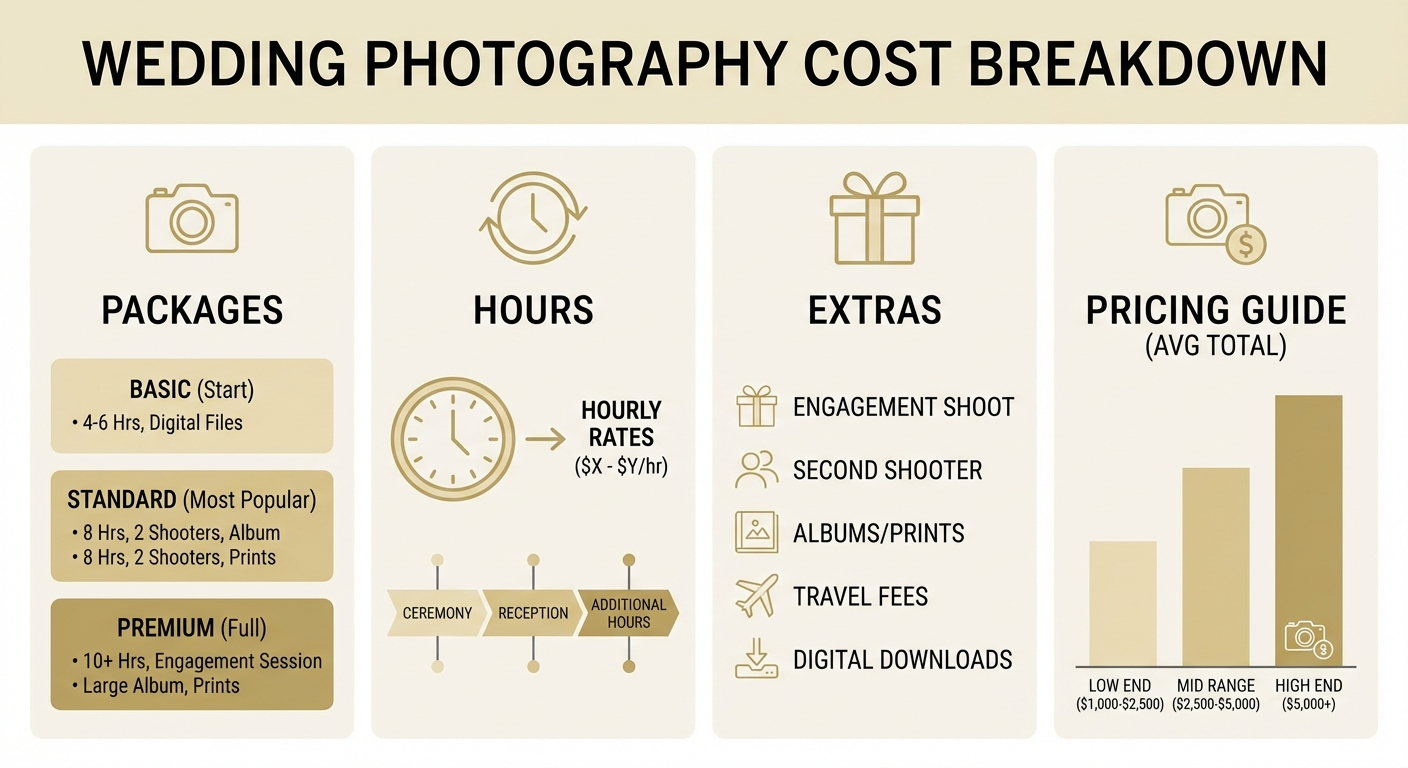
Photography is one area where I generally advise couples NOT to go too cheap. These are the only tangible memories you'll keep from the day. That said, there are smart ways to save.
Reduce Coverage Hours
Most packages default to 8-10 hours. If your ceremony and reception span 5-6 hours, you don't need a photographer for 10. Book 6-7 hours of coverage and coordinate with your photographer on the most important moments.
Skip the Second Photographer
A second photographer is valuable for large weddings (200+) but may be unnecessary for intimate weddings (under 100). Discuss with your photographer whether they recommend a second shooter for your specific event.
Skip Videography (or Go Hybrid)
Full videography packages cost $2,000-$4,000. If that's outside your budget:
- Ask a tech-savvy friend to record the ceremony with a good phone on a tripod
- Hire a videographer for ceremony only ($500-$1,000)
- Use a hybrid photographer/videographer who does both (more common in 2026)
- Skip it entirely — many couples prioritize photos over video
Book a Newer Photographer
Photographers with 1-3 years of experience charge significantly less than established veterans. Review their portfolio carefully, check references, and meet them in person. Many newer photographers produce stunning work and bring extra enthusiasm to every wedding.
Ask About Off-Peak Discounts
Photographers, like venues, charge more for Saturdays in peak season. Friday, Sunday, or winter weddings often come with 10-20% photography discounts.
Flowers & Decor Savings: $500-$3,000
Flowers are one of the easiest categories to reduce without anyone noticing.
Use In-Season, Locally Grown Flowers
Out-of-season flowers cost 2-3x more because they're imported. Work with your florist to choose varieties that are in bloom during your wedding month. Common affordable options: dahlias (late summer/fall), sunflowers (summer), carnations (year-round), baby's breath (year-round), greenery/eucalyptus (year-round).
Reduce the Number of Arrangements
You don't need flowers on every surface:
- Skip individual bridesmaid bouquets (give them a single statement flower instead)
- Use the ceremony arrangements as reception centerpieces (ask your florist to move them during cocktail hour)
- Alternate floral centerpieces with non-floral options (candle arrangements, lanterns, books, framed photos)
DIY Where It Makes Sense
Some floral elements are easy to DIY:
- Simple greenery garlands for tables
- Single-stem bud vases as centerpieces
- Boutonnieres (a single flower wrapped with ribbon)
Don't DIY your bridal bouquet or complex arrangements — the stress isn't worth the savings on your wedding morning.
Use Non-Floral Decor
Candles, fairy lights, lanterns, fabric draping, and greenery are all less expensive than elaborate floral arrangements and create equally beautiful atmospheres. A room filled with warm candlelight and simple greenery is often more stunning than one with expensive flower arrangements on every table.

Attire & Beauty Savings: $500-$1,500
Wedding Dress Alternatives
- Sample sales: Bridal shops sell sample dresses (tried on in-store) at 40-70% off. These are the same designer dresses, just slightly worn from fittings.
- Pre-owned dresses: Sites like Still White, Nearly Newlywed, and Poshmark sell once-worn wedding dresses at significant discounts.
- Non-bridal white dresses: White formal dresses from brands like ASOS, Lulu's, and BHLDN cost $100-$400 vs. $1,000-$3,000 from bridal designers.
- Rent instead of buy: Rental services offer designer dresses for a fraction of the purchase price.
Save on Alterations
- Choose a dress that fits well off the rack to minimize alteration costs
- Get alteration quotes from independent seamstresses, not just the bridal shop (shops often mark up alteration costs by 30-50%)
- Skip unnecessary additions like a bustle if you plan to just hold your train
Hair and Makeup
- Do your own makeup (if you're comfortable) using YouTube tutorials and a professional setting spray
- Book a cosmetology student for hair and makeup at 50-70% less than established artists
- Do a trial run yourself before committing to a professional — you might not need one
Groom's Attire
- Buy a well-fitting navy or charcoal suit ($200-$400) instead of renting a tuxedo ($150-$250). The suit becomes part of his wardrobe.
- Check sales at department stores and online retailers
- Skip the rental if he already owns a good suit
Stationery & Invitation Savings: $200-$800
Go Digital Where Possible
- Digital save-the-dates: Free or nearly free via email, wedding website, or Canva
- Wedding website for details: Instead of expensive info cards, direct guests to your free wedding website
- Digital RSVPs: Skip response cards and postage entirely
Print Smart
If you want physical invitations:
- Canva + online printer: Design in Canva (free) and print through an online service ($0.50-$1.50 per invitation vs. $3-$5 from a stationery company)
- Postcard invitations: Single flat card, no envelope needed, cheaper postage
- Simplify the suite: Skip the belly band, vellum wrap, wax seal, and extra info cards. An invitation and an RSVP card (or QR code to your website) is all you need.
Skip What No One Reads
- Ceremony programs: Guests glance at them and leave them on the chair
- Menu cards: Unless you have multiple options, guests don't need to read the menu
- Table numbers: Use a seating chart display at the entrance instead of individual table cards
Music & Entertainment Savings: $500-$2,000
DJ vs. Band
A live band costs $3,000-$8,000. A DJ costs $1,200-$2,500. Unless live music is one of your top 2-3 priorities, a good DJ provides a better value and more musical variety.
Spotify Playlist for Ceremony
Instead of hiring a ceremony musician ($300-$800), set up a Bluetooth speaker with a pre-curated playlist. Ask a friend to press play for the processional. This works perfectly well for most ceremonies.
Reduce DJ Hours
Book your DJ for the reception only (4-5 hours) instead of the full day. Use a speaker and playlist for the ceremony and cocktail hour.
Skip the Photo Booth
Photo booths cost $400-$1,000. Create a DIY photo station instead: a fun backdrop (streamers, a flower wall, or a decorated frame), a basket of props from a party store ($20-$30), and a sign encouraging guests to take photos with their phones using a specific hashtag.
The Tools That Prevent Budget Creep
Budget creep is the number one reason couples overspend. It happens gradually — an extra $200 here, a $150 upgrade there — until you're $5,000 over budget without any single decision that caused it.
The antidote is tracking. When every dollar is visible, you make better decisions.
Wedding Budget Spreadsheet ($17)
Our budget spreadsheet includes 80+ line items across every category, including the hidden costs (service charges, gratuities, overtime) that cause budget surprises. It automatically calculates your remaining budget as you enter actual costs, so you always know exactly where you stand.
For couples focused primarily on staying on budget, this is the most cost-effective planning tool available.
Wedding Planning Tracker ($27)
The planning tracker includes everything in the budget spreadsheet plus guest list management, vendor tracking, a 12-month planning timeline, and a day-of schedule. If you want one tool that covers all aspects of planning, this is it.
Guest List + Seating Kit ($9)
Your guest count directly drives your budget. This kit helps you manage RSVPs, track meal preferences, and plan seating for up to 300 guests. At $9, it costs less than a single wedding favor per guest.
Notion Wedding Template ($37)
For couples who love Notion, our template provides a complete planning workspace where budget, guests, vendors, and timeline are all connected. It's the most comprehensive option for couples who want a visual, project-management style approach.
Bottom line: These tools cost $9-$37. A single prevented budget mistake saves 10x that amount. The best investment you can make in your wedding budget is a tool that helps you stick to it.
Sample Budgets: $10K, $15K, $20K, $25K
$10,000 Wedding Budget (50-75 guests)
| Category | Budget | Strategy |
|---|---|---|
| Venue | $1,500 | Public park, backyard, or restaurant private room |
| Catering | $3,000 | Buffet lunch or brunch, $40-$50/person |
| Bar | $750 | Beer and wine only, or BYOB |
| Photography | $1,500 | 5-hour coverage, newer photographer |
| Flowers/Decor | $500 | Grocery store flowers, candles, DIY greenery |
| Attire | $600 | Sample sale dress, own suit |
| Music | $500 | DJ for reception only, playlist for ceremony |
| Stationery | $150 | Digital save-the-dates, simple printed invitations |
| Officiant | $200 | Friend or affordable officiant |
| Miscellaneous | $300 | License, favors, small gifts |
| Contingency (10%) | $1,000 | |
| Total | $10,000 |
$15,000 Wedding Budget (75-100 guests)
| Category | Budget | Strategy |
|---|---|---|
| Venue | $3,000 | All-inclusive restaurant or off-peak venue |
| Catering | $4,500 | Buffet dinner, $45-$55/person |
| Bar | $1,500 | Beer, wine, and 2 signature cocktails |
| Photography | $2,500 | 6-7 hour coverage |
| Videography | $0 | Friend with good camera or skip |
| Flowers/Decor | $1,000 | Mix of florist and DIY |
| Attire | $1,000 | Online dress, alterations, suit purchase |
| Music | $1,000 | DJ for 4 hours |
| Stationery | $250 | Canva design, online printing |
| Officiant | $300 | |
| Miscellaneous | $450 | License, favors, gifts, gratuities |
| Contingency (10%) | $1,500 | |
| Total | $15,000 |
$20,000 Wedding Budget (100-150 guests)
| Category | Budget | Strategy |
|---|---|---|
| Venue | $4,000 | Friday or Sunday at a mid-range venue |
| Catering | $7,000 | Buffet or family-style dinner |
| Bar | $2,000 | Beer, wine, limited cocktails |
| Photography | $3,000 | 7-8 hour coverage |
| Videography | $1,000 | Ceremony + highlights only |
| Flowers/Decor | $1,500 | Professional florist, simplified arrangements |
| Attire | $1,200 | |
| Music | $1,500 | DJ for 5 hours |
| Stationery | $350 | |
| Officiant | $300 | |
| Miscellaneous | $650 | |
| Contingency (10%) | $2,000 | |
| Total | $20,000 |
$25,000 Wedding Budget (125-175 guests)
| Category | Budget | Strategy |
|---|---|---|
| Venue | $5,500 | Saturday at a mid-range venue, off-peak month |
| Catering | $8,500 | Plated or family-style dinner |
| Bar | $2,500 | Open bar, beer/wine/basic liquor |
| Photography | $3,500 | Full day coverage |
| Videography | $1,500 | Highlight reel + ceremony |
| Flowers/Decor | $2,000 | Professional florist |
| Attire | $1,500 | |
| Music | $1,800 | DJ full reception + ceremony musician |
| Stationery | $500 | Semi-custom invitations |
| Officiant | $350 | |
| Miscellaneous | $850 | |
| Contingency (10%) | $2,500 | |
| Total | $25,000 |

Budget Wedding Myths vs. Reality
Myth: "DIY saves money."
Reality: Sometimes. DIY flowers, invitations, and decor can save money if you have the skills and time. But many couples underestimate the cost of supplies and dramatically underestimate the time required. DIY favors, for example, often cost more than store-bought alternatives once you factor in materials, time, and mistakes. Only DIY things you're genuinely skilled at.
Myth: "Weekday weddings are tacky."
Reality: Not in 2026. Friday evening and Sunday afternoon weddings have become completely mainstream. Guests appreciate the slightly more relaxed vibe, and you save $1,000-$5,000.
Myth: "Cash bars are rude."
Reality: This depends on your region and social circle. In some areas, cash bars are common and expected. In others, they're frowned upon. A good compromise: offer beer, wine, and one signature cocktail for free, with a cash bar for premium liquor. No one goes without a drink, and you save significantly.
Myth: "Small weddings are less fun."
Reality: Some of the most fun, energetic weddings I've planned had under 75 guests. A small guest list means everyone knows each other, the dance floor fills up faster, and the energy is concentrated. Don't inflate your guest list to create "atmosphere" — quality guests create atmosphere, not quantity.
Myth: "You need a wedding planner."
Reality: A full-service wedding planner costs $2,000-$5,000. A day-of coordinator costs $800-$2,000. For budget weddings, a comprehensive planning spreadsheet ($27) or Notion template ($37) can replace the organizational function of a planner. Consider investing in a day-of coordinator only — they ensure the event runs smoothly without the cost of full-service planning.
Planning a wedding on a budget starts with the right tools.
Our Wedding Planning Bundle
- Wedding Budget Spreadsheet ($17) — 80+ line items, automatic calculations, hidden cost reminders. Learn more →
- Wedding Planning Tracker ($27) — Budget + guest list + vendor tracking + timeline. Learn more →
- Notion Wedding Template ($37) — Complete planning workspace in Notion. Learn more →
- Guest List + Seating Kit ($9) — Track up to 300 guests with RSVP and seating management. Learn more →
Every dollar you spend on planning tools saves you $10+ in prevented mistakes.
FAQ
What is the cheapest month to have a wedding?
January and February are typically the cheapest months for weddings in most U.S. regions. Venue rental, catering, and vendor rates are at their lowest because demand is minimal. November (excluding Thanksgiving weekend) and early March are also affordable options. You can save 20-40% on venue costs alone by choosing an off-peak month compared to the June-October peak season.
How much can you realistically save by cutting the guest list?
Each guest costs approximately $150-$300 when you factor in food, drinks, rental space, favors, and a proportional share of staffing costs. Cutting 25 guests saves $3,750-$7,500. Cutting 50 guests saves $7,500-$15,000. Guest list reduction is consistently the single most impactful budget decision a couple can make. Use our guest list template to manage your list strategically.
Is it cheaper to have a wedding at home?
A home wedding eliminates venue rental costs but introduces other expenses: tent rental ($1,000-$5,000), table and chair rental ($500-$2,000), portable restrooms ($200-$500), generator or power supply ($200-$500), and cleanup costs. A backyard wedding for 100 guests typically costs $2,000-$5,000 in rentals alone. It can still be cheaper than a venue, but the savings aren't as dramatic as most couples expect.
How do you plan a wedding on a $5,000 budget?
A $5,000 wedding is possible for 30-50 guests. Key strategies: courthouse or park ceremony ($0-$200), restaurant reception with a set menu ($1,500-$2,500), limited bar ($300-$500), a photographer for 3-4 hours ($800-$1,200), DIY flowers ($100-$200), a non-bridal dress ($100-$300), and a Spotify playlist instead of a DJ ($0). Every element is simpler but can still be beautiful and meaningful.
Should I go into debt for my wedding?
No. Financial experts overwhelmingly advise against starting a marriage with wedding debt. A 2025 study found that couples who take on wedding debt are more likely to experience financial stress in the first two years of marriage. Plan a wedding you can pay for with savings and confirmed contributions. If your budget is tight, have a smaller wedding now and plan a larger celebration for a future anniversary when you've had time to save.
What can I skip entirely at my wedding?
Items most couples can skip without anyone noticing: wedding favors (most end up left behind), ceremony programs, a guest book (or use a creative free alternative like a polaroid board), a limo or special transportation (Uber exists), a videographer (if photography is your priority), a wedding planner (use a planning template instead), and a formal cake (a dessert bar or simple sheet cake works just as well).
How far in advance should I start planning a budget wedding?
Start planning 10-14 months before your desired wedding date. Budget weddings often require more lead time, not less, because you need time to: compare vendor quotes, wait for sales, find off-peak availability, coordinate DIY projects, and make strategic decisions rather than last-minute panic choices. Use a planning timeline tracker to stay organized across the full planning period.
Sources and Methodology
- Average wedding cost data: The Knot 2025 Real Weddings Study and WeddingWire 2025 Newlywed Report, adjusted for 2026 market conditions
- Vendor pricing: Based on vendor rate surveys across 15 U.S. metro areas, weighted by population, verified against current marketplace listings
- Savings estimates: Calculated by comparing premium options (Saturday, peak season, full-service) against budget alternatives (off-peak, simplified formats) in the same markets
- Sample budgets: Built using real vendor pricing from mid-range U.S. markets, verified by Sophie Clarke based on actual weddings planned in similar budget ranges
- Financial advice: Wedding debt statistics from the National Foundation for Credit Counseling and the Institute for Divorce Financial Analysts
- Guest cost calculations: Derived from catering industry per-person averages inclusive of food, beverage, staffing, and rental allocations
- All prices: Reflect 2026 U.S. market averages. Costs vary significantly by region, with coastal and major metro areas typically 30-50% above national averages.
Visual Guide Gallery
Ready to plan with less stress?
Our Complete Wedding Planning Tracker has 247 tasks, a 12-month countdown, and vendor contact hub, all in one spreadsheet.
Get the Tracker - $27 →