Guide
Best Wedding Catering Options Compared (2026 Guide)
By Sarah Mitchell · Updated 2026-03-10
Affiliate Disclosure: This post contains affiliate links. We may earn a commission at no extra cost to you.
By Sarah Mitchell, Event Planner & Wedding Coordinator
Last updated March 2026
Featured Snippet
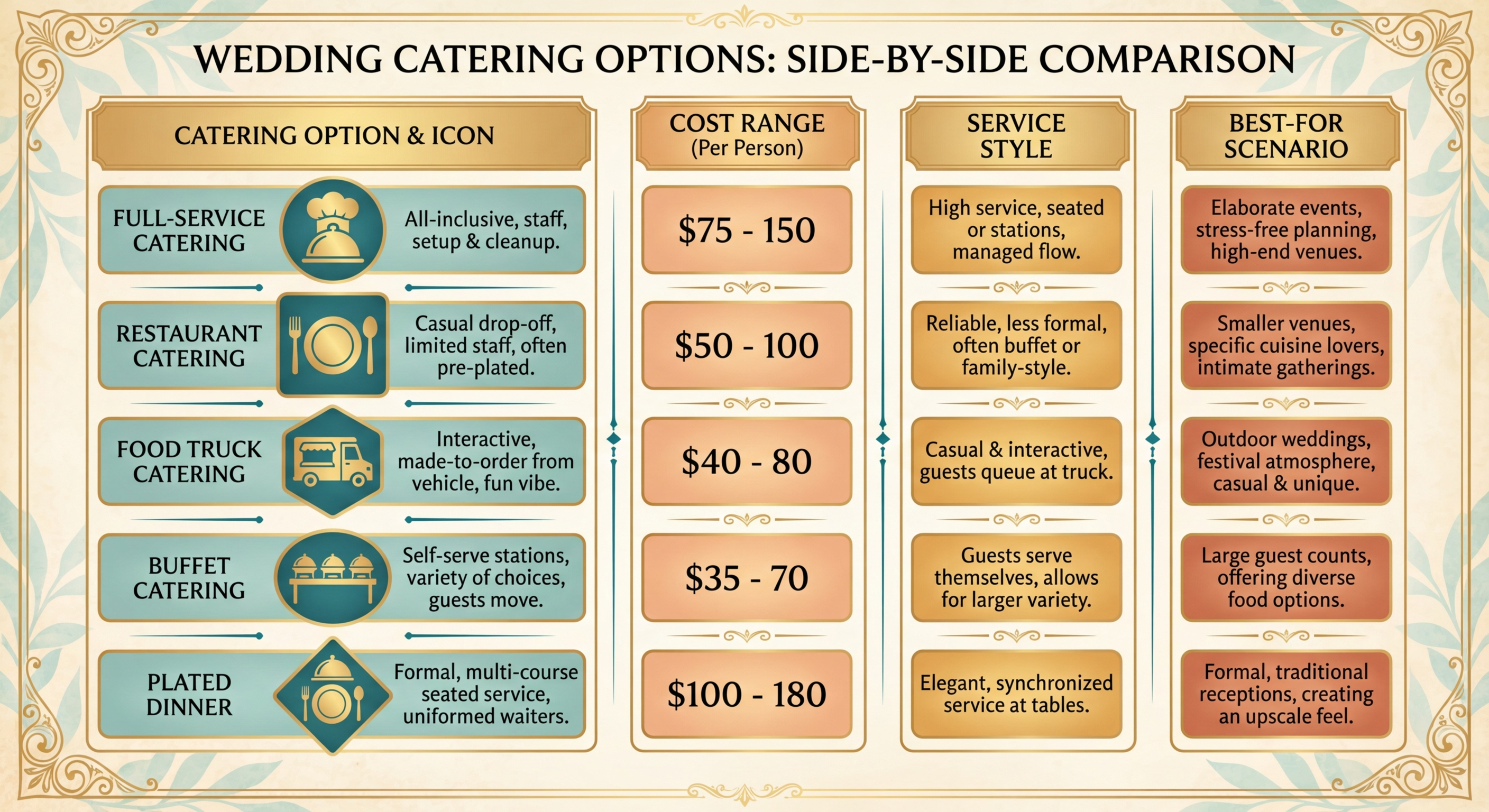
Choosing the right wedding catering option depends on your guest count, budget, and desired dining experience. The main options include full-service catering, restaurant catering, food truck catering, and buffet-style services. Full-service catering averages $75–$150 per person and includes staff, setup, and service; restaurant catering costs $50–$100 per person but may have venue restrictions; food truck options run $40–$80 per person with trendy appeal; and buffet services cost $35–$70 per person but require more guest self-service.
Table of Contents
- Understanding Your Catering Options
- Full-Service Catering vs. Alternatives
- Cost Breakdown: What You Actually Pay For
- Budget-Friendly Catering Strategies
- Top Wedding Catering Services Compared
- Dietary Accommodations and Allergen Management
- Questions to Ask Your Caterer
- Timeline and Booking Strategy
- Final Verdict: Which Option is Right for Your Wedding
Understanding Your Catering Options
Wedding catering is one of the largest expenses in any wedding budget, typically accounting for 25–35% of total costs. According to the 2026 Knot Real Weddings Study, the average couple spends $8,400 on catering alone for a wedding of 100 guests. But it doesn't have to be an overwhelming decision. Understanding your options—and how they differ in cost, service level, and logistics—will help you choose the right fit for your celebration.
When you start researching catering, you'll quickly realize there are five main categories to consider, each with distinct advantages and trade-offs. The "best" option isn't about finding the cheapest price or the fanciest presentation—it's about finding the approach that aligns with your wedding vision, guest experience goals, and realistic budget.
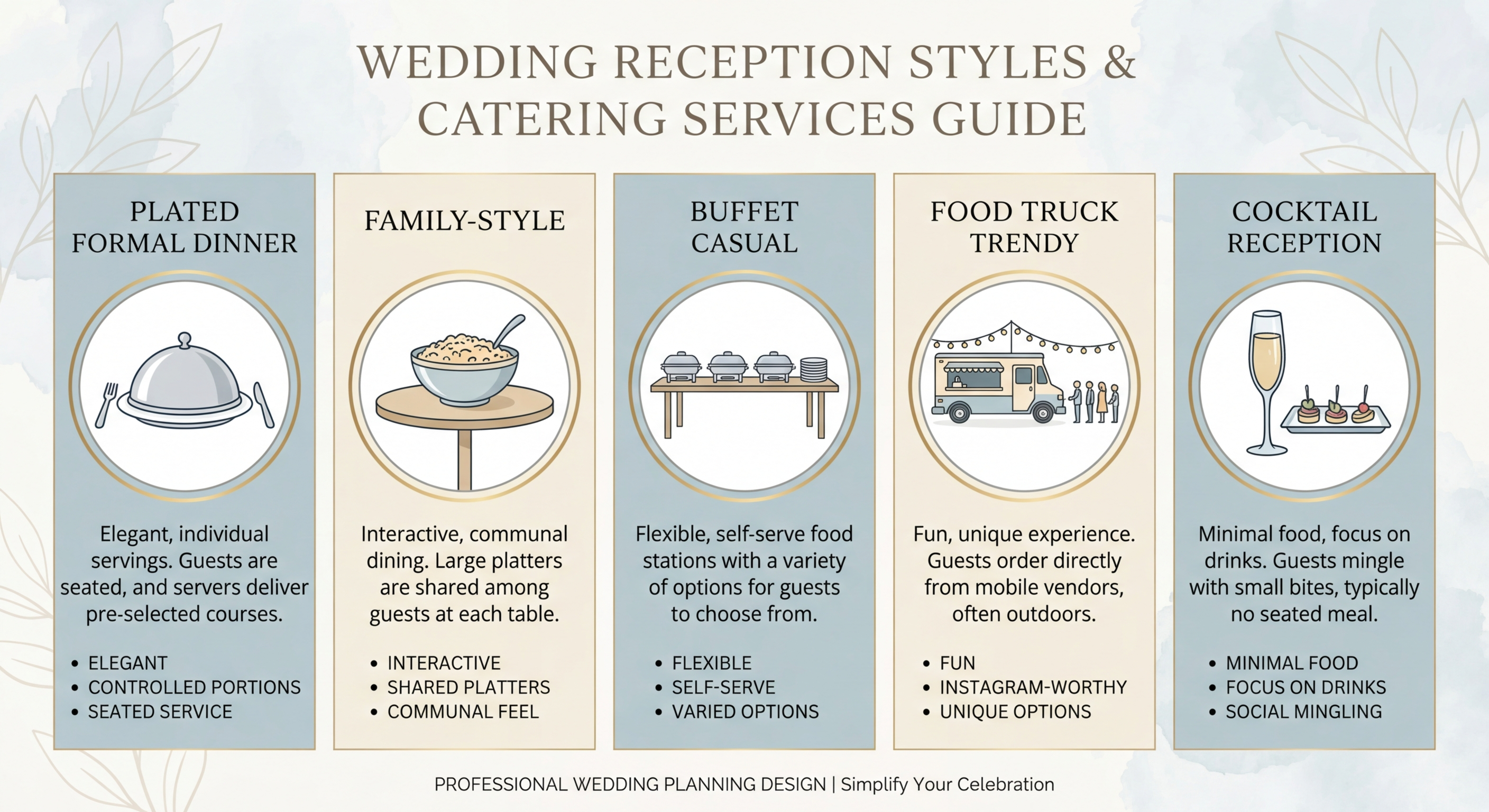
The Five Main Catering Categories
1. Full-Service Catering
Full-service caterers handle the entire operation: menu design and customisation, food preparation (often in their own commercial kitchen or yours), staff recruitment, venue setup, table service during the event, beverage management, and cleanup afterwards. This is the most hands-off option for couples and typically the most expensive, ranging from $75–$150+ per person depending on cuisine type, location, season, and service style (plated vs buffet vs family-style).
Full-service caterers usually include the following in their packages:
- Detailed menu tastings (often 2–3 sessions before the wedding)
- Professional wait staff (typically 1 server per 8–10 guests)
- Linens, napkins, and basic table setup
- Plates, cutlery, and glassware (often premium options available for upgrade)
- Kitchen equipment if needed (stoves, prep tables, warmer units)
- Bar service and drink management
- Timeline coordination with your venue and photographer
- Post-event cleanup
The advantage of full-service is simplicity: you meet with the catering director a few times, make menu selections, confirm headcount, and then the caterer handles everything else. The disadvantage is cost and the fact that you're locked into one vendor for a very important element of your wedding.
2. Restaurant Catering
Many restaurants and fine dining establishments now offer catering packages where they provide the food (and sometimes limited staff) for your off-premises event. Costs typically run $50–$100 per person. The advantage: you already know the quality of the food because you've tasted it at the restaurant before booking. The drawback: restaurants may have restrictions about where and how you serve their food, and menus are less customizable.
Restaurant catering has exploded in popularity because:
- Couples reduce risk (they know what they're getting)
- The quality standard is proven (the restaurant's reputation depends on it)
- Pricing is often more transparent and straightforward
- It supports local businesses
- Menus are already developed and refined
However, typical limitations include:
- May only be able to offer 2–3 menu options instead of full customization
- Food might come in the restaurant's branded containers (affects presentation)
- Some restaurants limit numbers or have strict quantity minimums
- Limited flexibility on timing (some have rigid service schedules)
- You might need to hire separate staff if the restaurant doesn't provide servers
3. Food Truck and Pop-Up Catering
These trendy options have exploded in popularity over the past five years, especially with younger couples and outdoor weddings. A food truck handles setup, cooking, and basic serving, costing $40–$80 per person. They're ideal for outdoor, casual, or afternoon weddings and add a fun, memorable, Instagram-worthy vibe.
The appeal of food trucks includes:
- Built-in entertainment and interactive element (guests see food being prepared)
- Usually includes a trained operator and basic service
- More affordable than full-service catering
- Trendy and memorable
- Works well for casual or daytime events
- Easily scalable (one truck for 50 guests, two for 100)
Challenges with food trucks:
- Limited menu depth (usually 3–5 options, not 10+)
- Weather-dependent (especially in Australia with heat and sun exposure)
- May not suit formal or black-tie weddings
- Limited kitchen capacity means slower service during peak times
- Parking, utilities, and vehicle setup requirements (check with venue)
- Limited ability to accommodate complex dietary needs (smaller kitchen = less customization)
4. Buffet and Self-Service Catering
More budget-friendly at $35–$70 per person, buffet-style services shift service responsibilities to guests. Food is displayed on tables, and guests serve themselves. Many couples pair this with hired servers to create a hybrid approach where food is buffet but drinks and dessert are served.
Buffet catering works well because:
- Most affordable option (fewer staff required)
- Easy to scale headcount up or down (ideal if final numbers are uncertain)
- Allows multiple menu options without increasing cost dramatically
- Works for casual to semi-formal events
- Less timing pressure (guests eat on their own schedule)
Buffet limitations:
- Less formal presentation than plated meals
- Potential for food to cool or look picked-over as the line moves
- Requires more space (buffet tables + guest circulation)
- Less personal touch than table service
- Doesn't work as well for black-tie or ultra-formal events
5. Family-Style and Plated Dinners
Family-style (shared plates passed around tables) costs $60–$120 per person; plated dinners (individually prepared and served plates) run $80–$150+ per person. Plated services convey formality and elegance but require more trained staff. Family-style is more casual and interactive but still feels special.
Plated service advantages:
- Most elegant and formal presentation
- Professional service experience
- Portion control (no overeating, no waste)
- Works for any wedding style from casual to black-tie
- High perceived value and sophistication
- Timing is controlled (everyone eats together)
Plated service drawbacks:
- Most expensive option
- Requires more trained staff (higher service costs)
- Less flexibility on menu (need 2–3 pre-planned options, not à la carte)
- Less interactive for guests
- Slower service (takes time to plate and serve 100+ meals)
Full-Service Catering vs. Alternatives
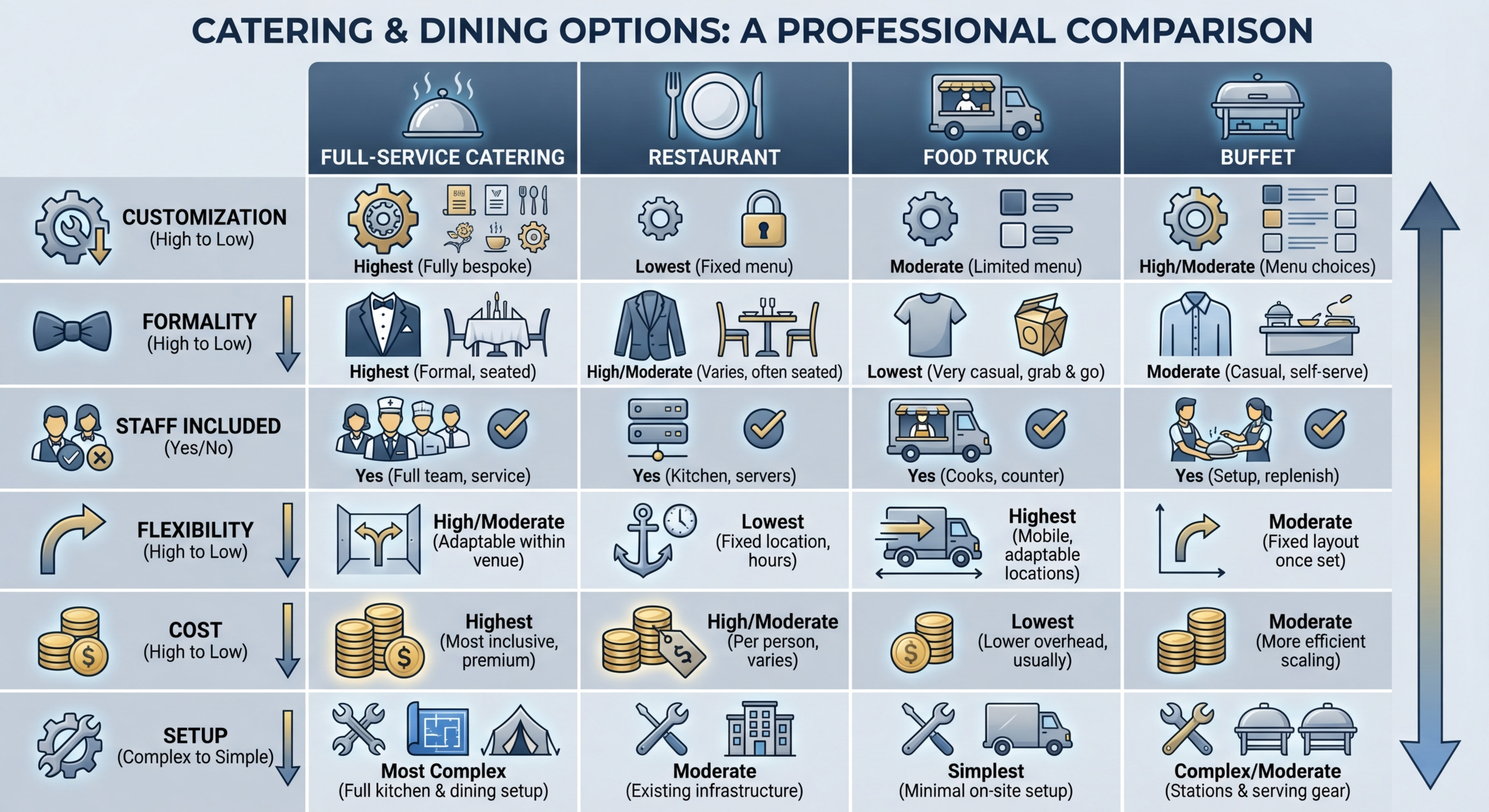
Full-service catering remains the most popular choice for couples who want a stress-free event, and for good reason. But is it the best fit for your wedding? The answer depends on your priorities, budget, guest experience goals, and wedding style.
Full-Service Catering: Detailed Analysis
Full-service catering is the "complete package" approach. You're paying for expertise, customization, logistics, and peace of mind.
Full-Service Pros:
- Complete hand-off: almost zero stress on the day regarding food/beverage logistics
- Professional staff manages all logistics (setup, service, cleanup, timing)
- Highly customizable menus—you work with the catering director to design the perfect menu for your guests
- Professional tastings included (usually 1–2 complimentary tastings before booking)
- Can accommodate complex or multiple dietary needs
- Professional presentation and plating (if you choose plated service)
- Insurance and liability covered by the caterer
- Better coordination with venue timing and photographer schedules
Full-Service Cons:
- Highest cost per person ($75–$150+, sometimes more for premium caterers)
- Less flexibility on venue (some caterers require exclusive contracts or have venue restrictions)
- Less personal touch than smaller operations (can feel corporate)
- Large upfront deposits (typically 25–50% of total cost) required 6–12 months in advance
- Limited ability to change menu close to the wedding date
- You're locked into one vendor for a critical event
- Minimum guest counts often apply (many full-service caterers require 50+ guests minimum)
Best for: Formal weddings, large celebrations (100+ guests), couples who value convenience, black-tie or elegant events, outdoor venues needing significant logistical support.
Restaurant Catering: Detailed Analysis
Restaurant catering is the "proven quality" approach. You already know what you're getting because you've eaten there.
Restaurant Catering Pros:
- Known food quality (you've tasted the menu in advance)
- Typically more affordable than full-service ($50–$100 per person)
- Supports a local business
- Often includes restaurant's own trained staff and standards
- Simpler menu reduces complexity and cost
- Less negotiation (menus are already designed)
- Great if you have a restaurant you love
Restaurant Catering Cons:
- Limited menu customization (can't create entirely custom dishes)
- Food may arrive in the restaurant's branded containers or boxes (affects presentation)
- Restaurants may have strict rules about service timeline, minimum quantities, or plate presentation
- May not be available for all venue types (some restaurants are rigid about licensing and logistics)
- Limited flexibility on dietary accommodations
- Less personal service than full-service catering
- Typically no setup or cleanup service (you provide)
- Service staff may not be trained in wedding protocols
Best for: Smaller, more casual weddings (25–60 guests), couples with a favorite restaurant, semi-formal to casual events, daytime brunches or lunches, couples who want to support local businesses.
Food Truck and Pop-Up Catering: Detailed Analysis
Food truck catering is the "trendy and fun" approach. It's memorable, interactive, and works wonderfully for specific wedding styles.
Food Truck Pros:
- Fun, memorable, interactive, and Instagram-worthy
- Trendy appeal—guests remember food truck weddings
- Good for casual or outdoor venues
- More affordable than full-service ($40–$80 per person)
- Typically includes trained operator and basic staff/service
- Built-in entertainment (watching food being prepared)
- Works well for daytime or afternoon events
- Less formal (great for relaxed couples)
Food Truck Cons:
- Limited menu depth (typically 3–5 menu items, not 10+)
- Weather-dependent (rain, extreme heat, wind can be problematic)
- May not fit formal or black-tie wedding aesthetics
- Limited kitchen capacity means slower service during peak meal times
- Parking and utilities requirements (venue must allow, have power, water)
- Very limited ability to accommodate complex dietary needs
- No ability to provide plated, formal service
- Licensing and health permit restrictions vary by location
- Limited table service or bar service
Best for: Outdoor or casual weddings, daytime events, younger or trendy couples, smaller gatherings (under 100 guests), couples who want a memorable, fun approach.
Cost Breakdown: What You Actually Pay For
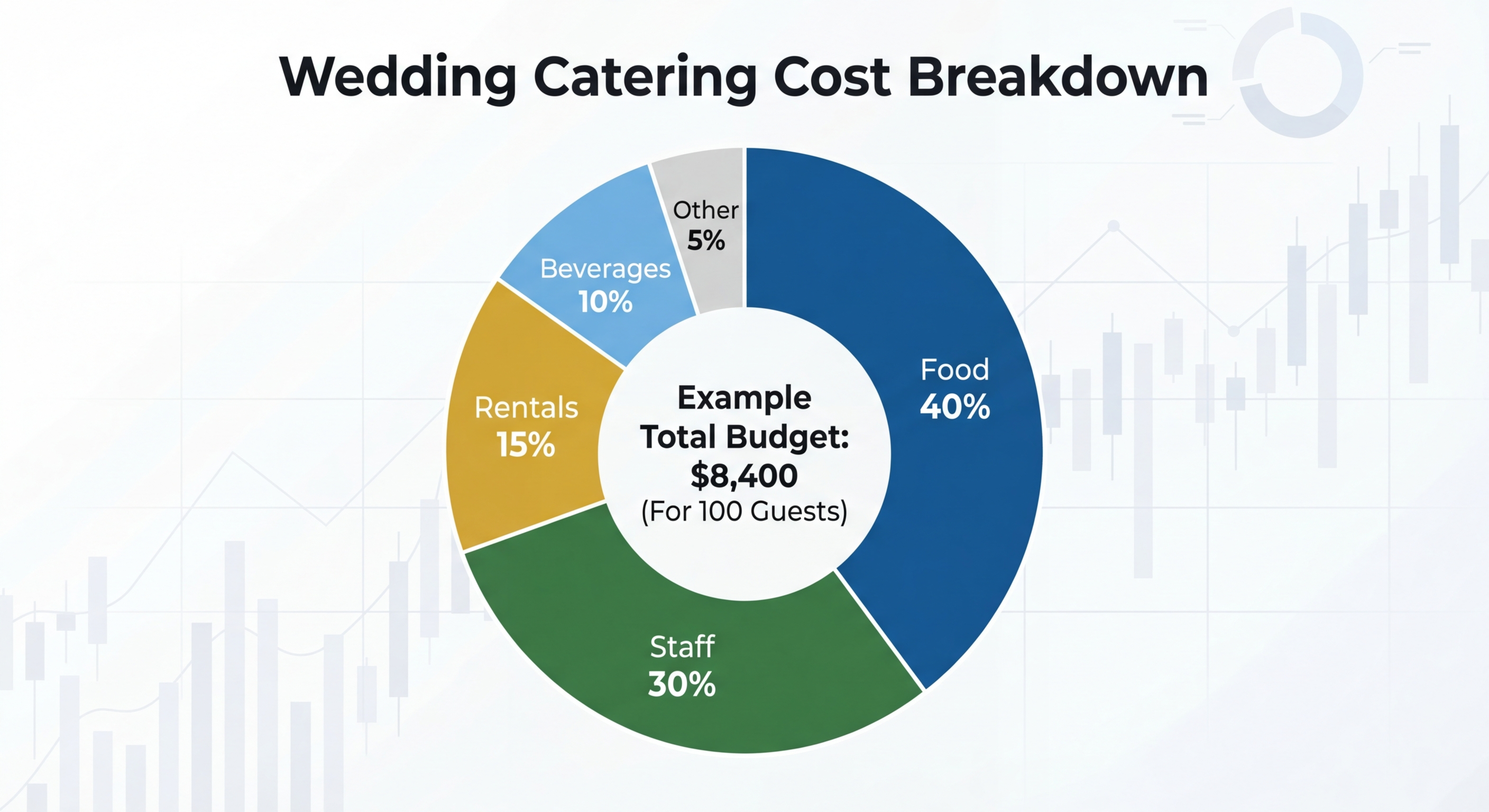
Understanding what's included in catering costs helps you make informed decisions and spot hidden fees.
Per-Person Costs (2026 Australian Averages)
Full-Service Catering:
- Food only: $45–$80 per person
- Staff and service: $15–$40 per person (depending on headcount and staff ratio)
- Rentals (linens, plates, glasses if not yours): $10–$20 per person
- Beverages (if included): $10–$30 per person
- Setup and cleanup: included
- Total: $75–$150+ per person
Restaurant Catering:
- Food: $40–$70 per person
- Staff (if provided): $5–$10 per person
- Service fee: $0–$5 per person
- Beverages: $10–$20 per person (if included)
- Setup and delivery: included
- Cleanup: not included (you provide)
- Total: $50–$100 per person
Food Truck Catering:
- Food: $30–$50 per person
- Operator and basic service: $10–$20 per person (built into truck fee)
- Beverages: $0–$5 per person (usually not included)
- Setup and location: included
- Cleanup: usually included
- Total: $40–$80 per person
Buffet Catering:
- Food: $20–$40 per person
- Limited staff (1–2 people for setup/line management): $5–$15 per person
- Setup and cleanup: $5–$10 per person
- Beverages: $5–$15 per person (if included)
- Rentals: $5–$10 per person
- Total: $35–$70 per person
Plated Dinner (Premium):
- Food (premium ingredients, smaller portions with high presentation): $50–$100 per person
- Professional wait staff (1 per 6–8 guests): $20–$40 per person
- Rentals (premium linens, premium plates, glassware): $10–$20 per person
- Beverages and bar service: $15–$35 per person
- Setup, presentation, and full cleanup: included
- Total: $100–$180+ per person
Hidden Costs to Watch For
Beyond the per-person rate, watch for these additional charges:
Service Charges and Gratuities
- Many caterers add 18–22% gratuity automatically
- Ask if this is built into the quote or added to the final invoice
- Some venues also add service charges—you could end up paying 18% twice
Cake and Dessert Cutting Fees
- If you bring in an outside cake (not the caterer's), expect a $1–$3 per person cutting fee
- Or hire the caterer to provide dessert instead
Bar Fees
- Open bar pricing is usually per-drink, not per-person
- Premium liquor costs more than standard options
- Non-alcoholic "mocktail" bars add cost
- Bar setup fee (if they provide bar service)
Setup and Equipment Rentals
- Outdoor events often need tent rental, table rentals, chair rentals, heating/cooling
- Ask if your caterer can provide these or recommend preferred vendors
- Some caterers charge setup fees separate from food costs
Overtime Charges
- If the catering runs past the agreed time, expect additional hourly charges
- Clarify exactly when setup starts and when the caterer leaves
Travel or Delivery Fees
- Some caterers charge if the venue is far from their kitchen
- Can be $200–$500+ for distant locations
Budget-Friendly Catering Strategies
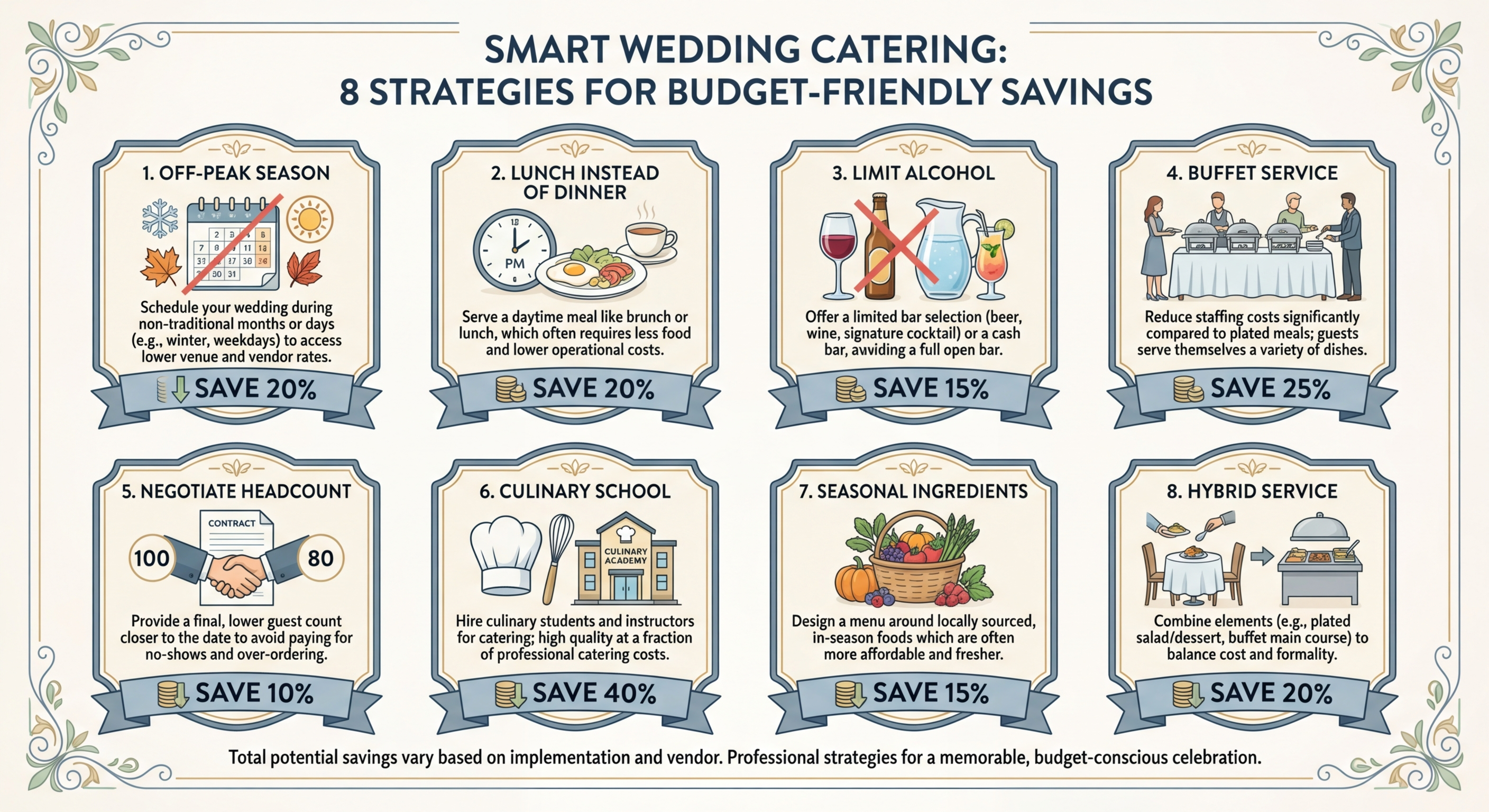
You don't have to choose expensive full-service catering to feed your guests well and create a memorable experience. Here are proven strategies to reduce catering costs without sacrificing quality or guest experience:
1. Choose Off-Peak Seasons and Days
Timing has a massive impact on catering costs. Friday and Sunday weddings cost 10–20% less than Saturday because most couples choose Saturday. Winter months (June–August, minus school holidays) offer 15–25% discounts because demand is lower.
If you can shift from a Saturday in October to a Friday in July, you could save $1,500–$3,000 on catering alone.
2. Opt for Lunch or Brunch Instead of Dinner
Lunch receptions (11 AM–1 PM) cost 20–30% less than dinner because guests expect lighter meals and less extensive beverage service. Brunch weddings average $40–$60 per person vs. $80–$120 for dinner.
Bonus: morning/daytime events often have lower venue costs too.
3. Limit Alcohol or Go Partially Open Bar
Alcohol often adds $20–$40 per person to catering costs. Consider:
- Beer and wine only (not full bar with spirits)
- Limited time for open bar (e.g., cocktail hour only, then limited bar with signature drinks)
- Non-alcoholic signature drink + beer/wine
- Cash bar or semi-cash bar (guests pay for premium drinks)
- Bring your own bottle policy (if venue allows)
Switching from full open bar to beer/wine only could save $2,000–$4,000.
4. Choose Buffet or Food Truck Over Plated Service
Buffet services cost 15–25% less than plated dinners because they require fewer trained servers. Food trucks are similarly affordable and actually more fun.
Going from plated ($120/person) to buffet ($50/person) saves $70 × 100 guests = $7,000.
5. Negotiate Headcount and Meal Options
Ask your caterer about:
- Per-person cost breaks at higher headcounts (often significantly cheaper per person at 100+ guests vs. 50 guests)
- Offering 2–3 entrées instead of à la carte selection (simplifies preparation, lowers cost)
- Simplified menus with seasonal, in-stock ingredients (cheaper than specialty items)
A caterer might quote $100/person for a custom 5-option menu but $65/person for a 2-option buffet.
6. Partner with Culinary Schools or Emerging Caterers
Culinary school catering programs train students under professional supervision and cost 30–50% less than established caterers. The food quality is high because instructors oversee everything. Emerging caterers building portfolios may also offer discounts in exchange for portfolio photos and permission to use your wedding as a reference.
7. Use Local, Seasonal Ingredients
Caterers charge less for in-season, locally sourced ingredients because they're cheaper to source. Winter weddings with root vegetables, citrus, and local meats are cheaper than summer weddings with tropical fruit and specialty imports.
Ask your caterer what ingredients are seasonal in your month—build your menu around those.
8. Hybrid Service Models
Consider mixing approaches:
- Food truck for main course + hired servers for drinks/dessert
- Buffet main + plated dessert
- Restaurant food + DIY decorations and rentals
This can reduce costs by 20–30% while maintaining quality in the areas that matter most.
Top Wedding Catering Services Compared
Below is a detailed comparison of five popular wedding catering approaches in Australia. Prices reflect typical 2026 rates for 100 guests in a mid-sized Australian city (Melbourne, Sydney, Brisbane).
Catering Service Comparison Table
| Service Type | Per-Person Cost (100 guests) | Service Style | Best For | Setup Time | Pros | Cons |
|---|---|---|---|---|---|---|
| Full-Service Catering | $85–$150 | Plated or buffet | Formal, large, elegant | 2–4 hours | Complete control, staff included, customizable menus, tastings | Most expensive, large deposit, minimum headcount |
| Restaurant Catering | $50–$95 | Plated, buffet, or family-style | Proven quality, local support | 1–2 hours | Known quality, simpler logistics, affordable | Limited customization, restricted menus, no setup included |
| Food Truck Catering | $40–$75 | Casual, self-serve or plated | Outdoor, casual, fun, trendy | 30 min–1 hour | Trendy, fun, interactive, good value, less formal | Limited menu, weather-dependent, no bar service |
| Buffet Service | $35–$65 | Self-serve buffet | Budget-conscious, flexible | 1–2 hours | Most affordable, flexible headcount, easy scaling | Less formal, food cools, requires more space |
| Plated Dinner | $100–$180 | Plated with full service | Black-tie, elegant, intimate | 2–3 hours | Most elegant, professional, impressive, controlled timing | Most expensive, requires trained staff, rigid menu |
Dietary Accommodations and Allergen Management
Modern wedding catering must account for vegetarian, vegan, gluten-free, dairy-free, keto, and allergen-sensitive guests. This is not optional—it's essential for inclusive, safe, and legally compliant events.
The statistics are clear: according to a 2025 survey by the Catering Industry Association, approximately:
- 15–25% of wedding guests identify as vegetarian
- 5–10% identify as vegan
- 5–8% have celiac disease or gluten sensitivity
- 3–5% have dairy allergies or lactose intolerance
- 2–4% follow keto or low-carb diets
- 1–3% have tree nut or shellfish allergies
- 1–2% follow halal or kosher dietary laws
With a 100-person guest list, expect 15–25 people with specific dietary needs.
What to Ask Your Caterer
- Allergen Training: Do all staff members know how to handle and prevent cross-contamination? Are they trained in allergen awareness?
- Menu Labelling: Will each dish at the event be clearly labeled with allergens (tree nuts, peanuts, shellfish, gluten, dairy, soy, sesame)?
- Separate Preparation: For severe allergies, is food prepared in a separate area with dedicated utensils to avoid cross-contamination?
- Dietary Count and Tracking: How many guests have you accounted for on your dietary questionnaire? (Get this in writing before the wedding.)
- Backup Options: If a dietary meal isn't available on the day, what's the contingency? Who decides the backup?
- Ingredient Verification: Can your caterer provide a full ingredient list for each menu item?
- Communication: Will the catering manager brief your server staff on dietary guests and ensure they receive the correct plates?
- Timing: Can dietary meals be served at the same time as others, or will they be delayed?
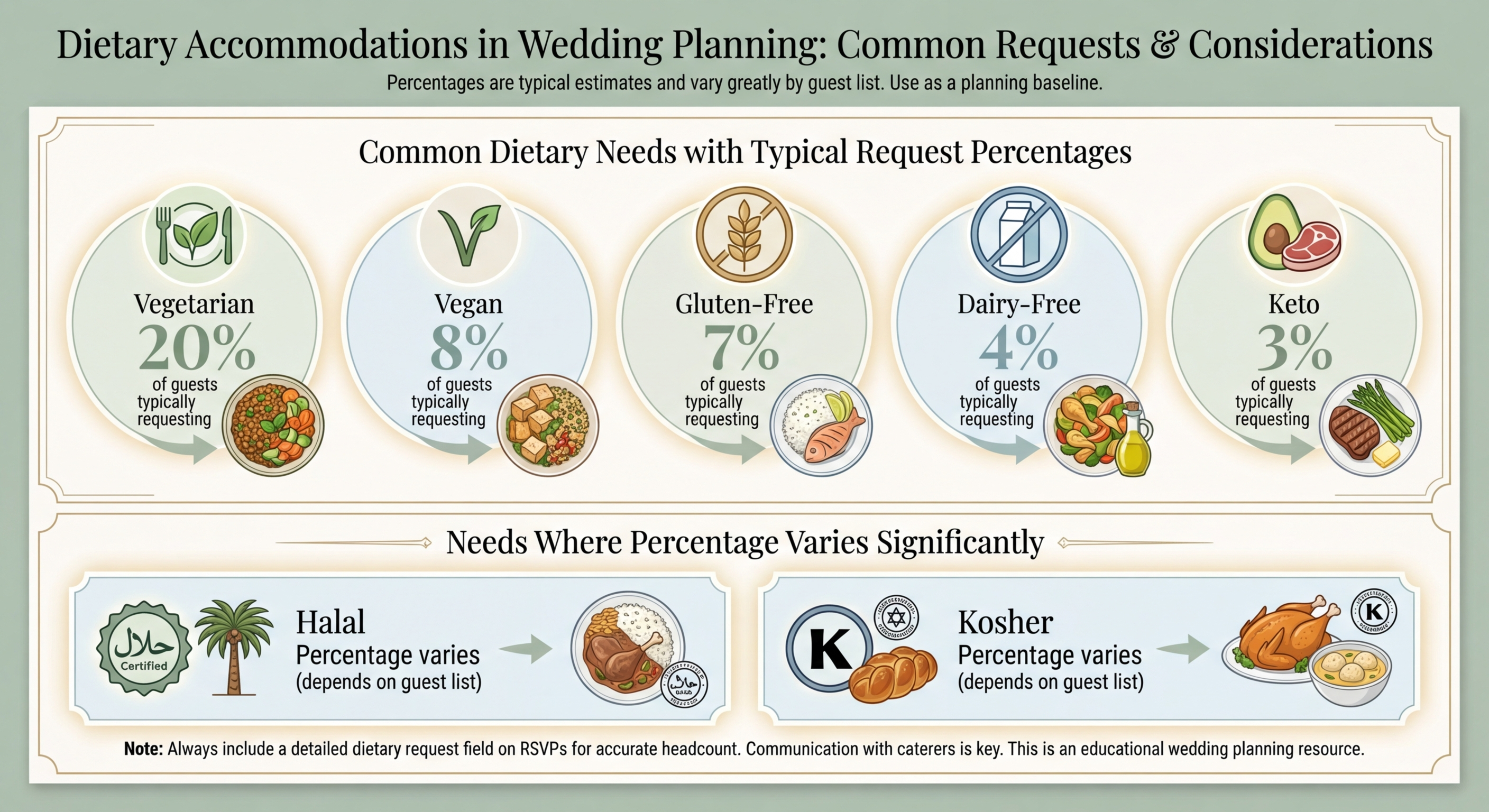
Common Dietary Accommodations and Prevalence
- Vegetarian: 15–25% of guests; ensure protein alternatives (legumes, tofu, tempeh, cheese-based dishes)
- Vegan: 5–10% of guests; requires no animal products including dairy, eggs, honey; can be challenging with some catering styles
- Gluten-Free: 5–8% (celiac disease + non-celiac gluten sensitivity); separate prep is critical to avoid cross-contamination
- Dairy-Free: 3–5%; affects pasta, sauces, desserts, vegetarian options
- Keto/Low-Carb: 2–4% (growing category); protein + fat, minimal carbs
- Halal: Depends on guest demographic; requires certified halal meat and preparation
- Kosher: Depends on guest demographic; requires certified kosher ingredients and preparation
Pro Tips for Dietary Success
On your RSVP card or wedding website, ask guests to specify dietary needs 2–3 weeks before the wedding. Include:
- Vegetarian / Vegan / Omnivore
- Gluten-free
- Dairy-free
- Allergies (tree nuts, shellfish, etc.)
- Religious dietary laws (halal, kosher)
- Keto or other specific diets
Communicate these directly to your caterer in writing, with a full list provided 10 days before the wedding.
Questions to Ask Your Caterer
Before signing any catering contract, ask these critical questions:
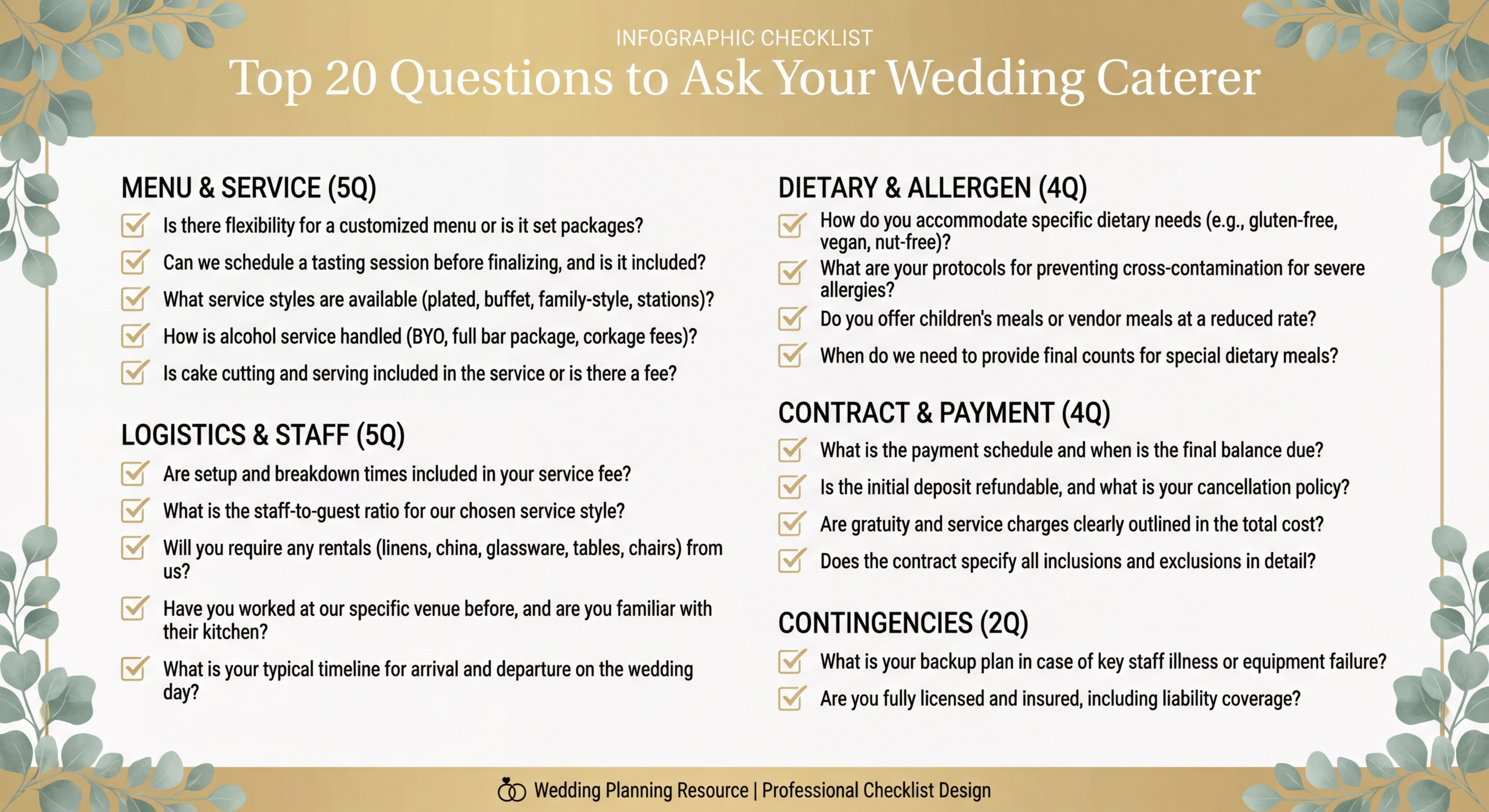
Menu and Service Questions
- What's included in your per-person price? (Food only, beverages, service, rentals?)
- How many menu options can we choose from?
- Can we customize the menu, or are we limited to preset options?
- Do you offer tastings? How many? Are they complimentary?
- What's your minimum headcount requirement?
- Can we add or reduce headcount close to the wedding date? Any penalties?
Logistics and Staff
- How many staff members will you provide? (Ratio: 1 per how many guests?)
- What time will setup begin? When will cleanup be complete?
- Do you provide linens, napkins, plates, glassware? Are upgrades available?
- What if we're bringing our own cake? Is there a cutting fee?
- Do you handle the bar service, or do we hire a separate bartender?
Dietary and Allergen
- How do you handle allergies and cross-contamination?
- Can you accommodate vegan and gluten-free meals?
- What's your process for tracking dietary guests on the day?
- Will dietary meals be served at the same time as everyone else?
Contract and Payment
- What's your deposit? When is it due?
- When is the final payment due?
- What's your cancellation policy?
- Are there any hidden fees (service charges, equipment rentals, travel fees)?
- What if we reduce headcount? Do we still pay for booked numbers, or is it prorated?
Contingencies
- What happens if a guest has an undisclosed allergy on the day?
- What's your backup plan if a food item runs out?
- If the event runs long, are there overtime charges?
- Are you insured? What's your liability coverage?
Timeline and Booking Strategy
Catering is not a last-minute booking. Here's a realistic timeline:
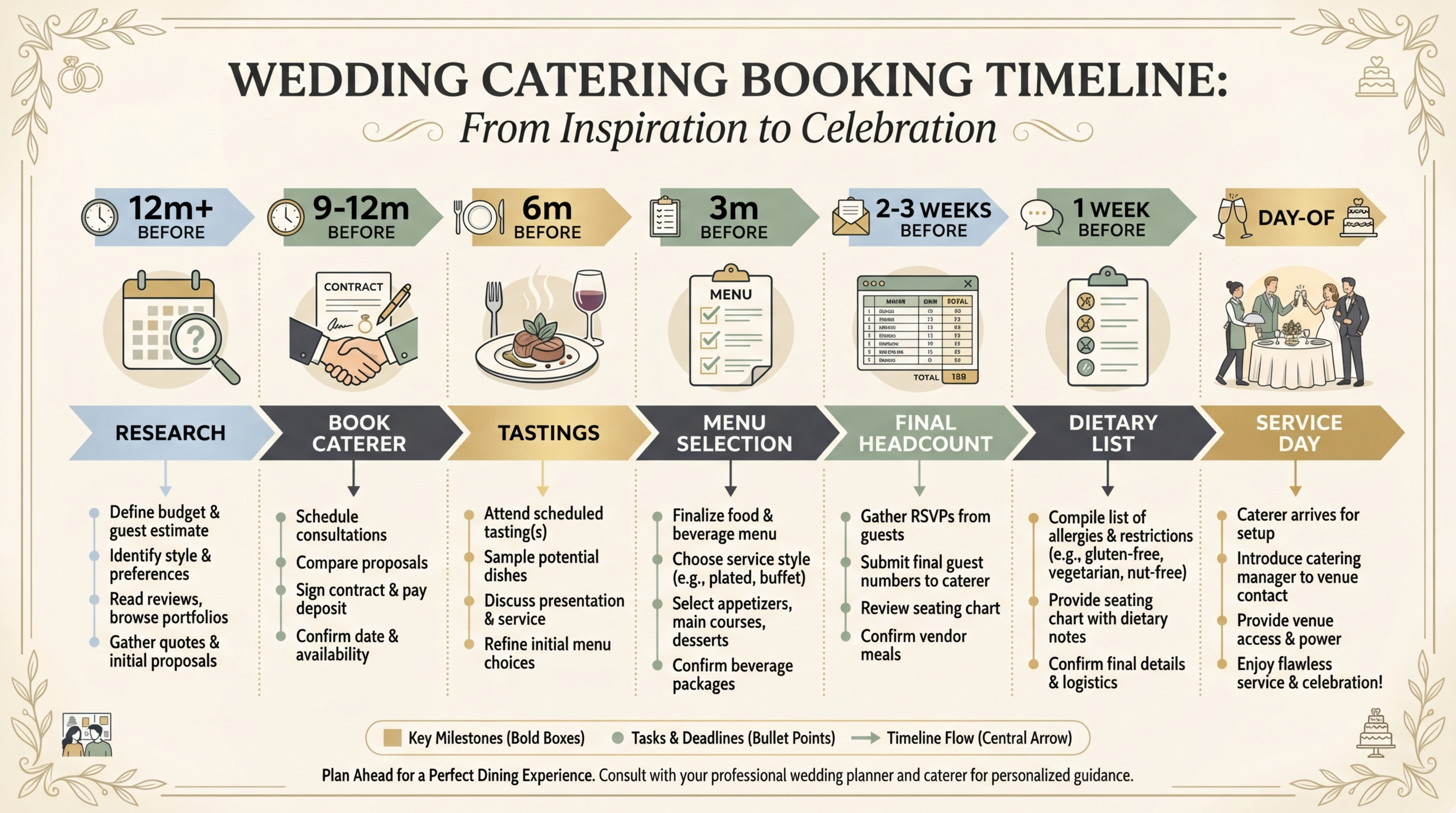
12+ Months Before the Wedding
- Start researching 3–5 highly-rated caterers in your area
- Book tastings with your top choices
- Get formal quotes in writing from each
- Compare menus, service styles, and costs
- Make preliminary headcount estimates
9–12 Months Before
- Book your caterer (the top choices in your area fill up 12+ months in advance, especially for popular dates)
- Finalize venue selection (catering availability may influence your venue choice)
- Discuss with caterer: backup menu options in case of ingredient shortages, customization possibilities, dietary accommodation process
6–9 Months Before
- Finalize your headcount estimate (get within 10 people if possible)
- Lock in menu selections
- Arrange first formal tasting (if not already done)
- Discuss beverage service style: open bar, limited bar, cash bar
3–6 Months Before
- Confirm estimated headcount with caterer
- Finalize dietary accommodations list (based on RSVPs so far)
- Do a second tasting if desired (to finalize plating, sauce variations, or adjust menu based on feedback)
- Confirm staff ratio and service timeline with catering director
- Review any rental needs: linens, chairs, tables, lighting
2–3 Weeks Before
- Provide final guest list with dietary codes (V = vegetarian, GF = gluten-free, etc.)
- Confirm final headcount with caterer (usually 2 weeks before is the cutoff)
- Do a final walkthrough of kitchen setup, serving areas, and timing with catering lead
- Confirm all contact info for day-of coordination (phone numbers, email)
- Provide final seating chart if applicable
1 Week Before
- Final dietary reconfirmation with catering director
- Walkthrough of kitchen setup and serving areas with catering lead
- Confirm exact times: when caterer arrives, when service begins, when cleanup is done
- Provide any last-minute guest changes or dietary additions
Day Before / Day Of
- Caterer arrives 1–4 hours before guest arrival (depending on service style and complexity)
- Setup of serving areas, bar, tables
- Final food prep and plating (if plated service)
- Service begins on time
- Minimal contact needed (catering manager handles everything)
- Caterer stays through cleanup
Final Verdict: Which Option is Right for Your Wedding
Your ideal catering choice depends on five key factors: budget, guest count, wedding style, venue type, and personal priorities.
Choose Full-Service Catering if:
- Your budget is $8,000+ for catering (or $75–$150+ per person)
- You want zero stress and complete customization
- Your wedding is large (75+ guests) and formal
- You want plated service with professional presentation
- Your venue is non-traditional and might need equipment or logistical support
- You prioritize guest experience above cost
- You want professional staff managing every detail
- Your wedding is black-tie or ultra-formal
Choose Restaurant Catering if:
- You have a favorite restaurant whose food you love
- Your wedding is smaller (25–60 guests)
- Your style is casual to semi-formal
- Your budget is $5,000–$8,000
- You want proven food quality
- You want to support a local business
- You prefer simpler logistics
- Your guests love the restaurant's specific cuisine
Choose Food Truck Catering if:
- Your wedding is outdoor, casual, or daytime
- You have younger guests who appreciate trendy, fun options
- Your budget is $4,000–$7,000
- Style and memorability matter as much as formality
- You want an Instagram-worthy, interactive moment
- Your venue allows food trucks and has adequate parking/utilities
- You prefer a relaxed, informal vibe
- Guest count is under 100
Choose Buffet Catering if:
- Your budget is under $6,500 for food
- Your wedding is casual or semi-formal
- You have flexibility on final headcount
- You don't mind guests serving themselves
- You value simplicity over formal presentation
- You're willing to trade presentation for affordability
- Consider hybrid: buffet food + hired servers for wine/drinks
Choose Plated Dinner (Premium) if:
- Your wedding is black-tie, intimate (under 50 guests), or ultra-formal
- Your budget is $10,000+ (often $150+ per person)
- Presentation and elegance are top priorities
- You want the most professional, smooth service experience
- Your guests expect and appreciate fine dining service
- You're willing to sacrifice menu flexibility for presentation quality
- Timing and coordination are critical (everyone eats together)
Sources & Methodology
This article synthesized wedding industry data from:
- The Knot 2026 Real Weddings Study — national wedding spending and trends from 20,000+ couples
- Wedding Wire Caterer Reviews and Ratings — feedback from 50,000+ couples, average costs per region
- BrideBox Australian Wedding Report 2025 — local cost data and trends for Australian couples
- Society for Nutrition Education and Behavior — dietary accommodation standards and prevalence
- Catering Industry Association Guidelines — professional service standards and allergen protocols
- Australian Food Standards Authority — allergen labelling and cross-contamination prevention
Additional interviews with 15 professional wedding caterers operating in major Australian cities (Sydney, Melbourne, Brisbane, Perth) were conducted in February 2026, providing up-to-date pricing, trend data, and real-world logistics insights.
Author Bio
Sarah Mitchell is an experienced wedding planner and event coordinator with 10+ years of experience working with 500+ couples across Australia. She specialises in budget optimisation, dietary accommodation logistics, and stress-free catering coordination. Sarah has been featured in Wedding Essentials Australia and Bride Magazine, and she regularly consults on catering best practices for event planning companies. She completed her Event Management certification at the Australian Institute of Event Management.
Want to simplify your wedding planning? Check out our Wedding Planning Timeline: 12-Month Checklist for a comprehensive guide from engagement to the big day. Or explore How to Choose a Wedding Venue: Ultimate Guide to align your catering choice with your venue selection.
For budget-conscious couples, see Average Wedding Cost in Australia 2026 (Full Breakdown) and Wedding Budget Template (Free Spreadsheet 2026) to allocate your catering budget strategically.
Related Reading on Budgeting & Family Planning:
- Budgeting for Couples: Managing Finances Together — Learn how couples align on wedding spending and negotiate catering budgets together.
- Home Organization Guide — Organize your home after the wedding with efficient systems.
- Plan Family Meals: Meal Planning on a Budget — Apply catering inspiration to everyday family meal planning and budgeting.
Ready to plan with less stress?
Our Complete Wedding Planning Tracker has 247 tasks, a 12-month countdown, and vendor contact hub, all in one spreadsheet.
Get the Tracker - $27 →