Guide
Wedding Flowers Guide: Budget & Book Florals (2026)
By Sophie Clarke, Certified Wedding Planner · Updated 2026-04-02
Wedding flowers typically account for 8–10% of a couple's total budget, yet florals are consistently the category most couples underestimate. This guide covers everything you need to plan wedding flowers confidently — from choosing blooms by season and meaning, to building a realistic floral budget, comparing popular flower types, and booking the right florist without overpaying.
Last updated: April 2026
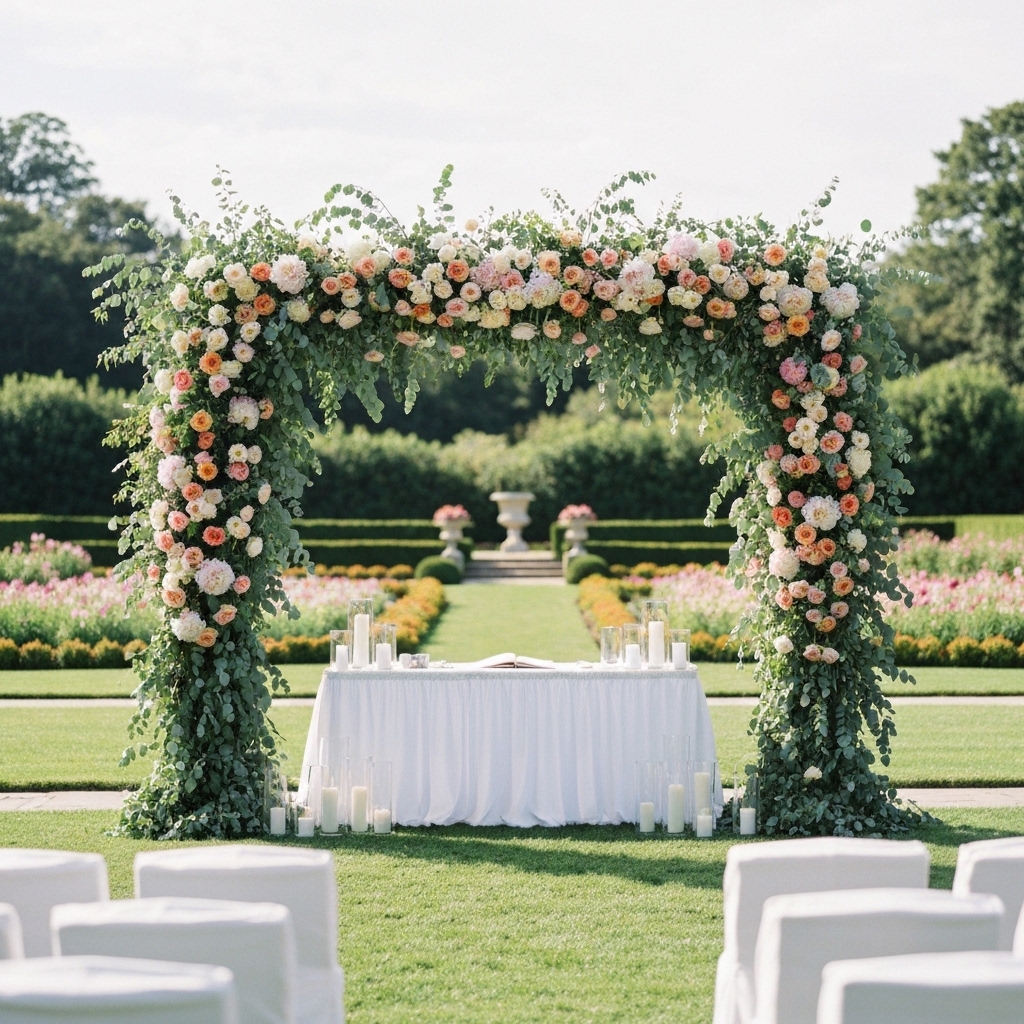
Table of Contents
- Why Wedding Flowers Matter More Than You Think
- How Much Do Wedding Flowers Cost in 2026?
- Popular Wedding Flowers Compared: Season, Cost & Meaning
- Wedding Bouquet Styles: Which One Suits You?
- Ceremony Florals: From Altar Arches to Aisle Markers
- Reception Florals: Centrepieces, Head Tables & More
- How to Book a Wedding Florist
- DIY Wedding Flowers: When It Works and When It Doesn't
- Preserving Your Wedding Bouquet
- FAQ
- Sources & Methodology
Why Wedding Flowers Matter
Wedding flowers do more than decorate a room. They establish mood, reinforce your colour palette, guide guests visually through ceremony and reception spaces, and — perhaps most importantly — show up in nearly every photo you will look at for the rest of your life.
According to The Wedding Report's 2025 industry analysis, florals and décor combined represent the third-largest wedding expenditure category after venue and catering. Couples who plan their floral vision early and communicate it clearly to a professional florist consistently report higher satisfaction with both the flowers themselves and the overall wedding aesthetic.
But flowers are also one of the most commonly misbudgeted wedding categories. Couples often receive florist quotes that are significantly higher than expected because they haven't accounted for all the elements involved: not just the bridal bouquet, but bridesmaids' bouquets, boutonnieres, corsages, ceremony arch, pew markers, cocktail hour florals, reception centrepieces, head table florals, cake flowers, and powder room arrangements.
This guide is designed to prevent those surprises. Let's work through every decision you'll need to make.
Wedding Flower Costs 2026
Average Wedding Floral Budget
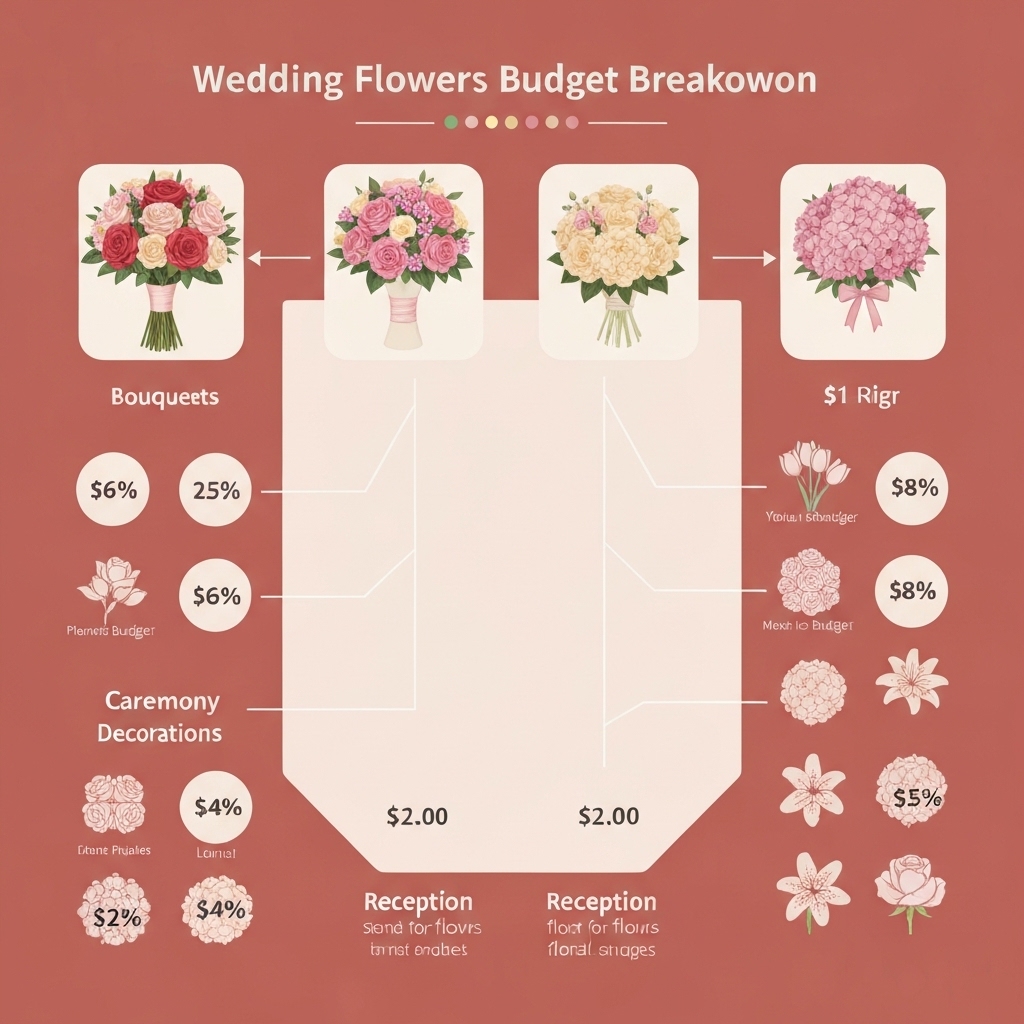
The widely cited industry benchmark is 8–10% of your total wedding budget allocated to florals. In practice, this means:
- $20,000 wedding: $1,600–$2,000 on flowers
- $30,000 wedding: $2,400–$3,000 on flowers
- $50,000 wedding: $4,000–$5,000 on flowers
However, couples who want dramatic floral installations — large altar arches, ceiling florals, lush tablescape runners — routinely spend 15–20% or more. According to WeddingWire's 2025 Cost of a Wedding report, the average US couple spent approximately $2,800 on wedding florals, with coastal markets like New York, Los Angeles, and San Francisco averaging $4,500–$6,500.
What Drives Floral Costs
Four variables determine your florist's quote more than any other:
1. Flower variety and season. Roses in June cost significantly less than peonies in November. In-season, locally grown flowers are always more affordable than imported or out-of-season blooms.
2. Labour and design time. A florist is not just selling flowers — they are selling skilled assembly, delivery, venue setup, and sometimes breakdown. Labour often makes up 40–50% of a floral quote.
3. Scale and guest count. Centrepieces for 20 tables cost more than centrepieces for 10. Scale multiplies every cost decision.
4. Market and location. Urban florists in high-cost markets charge more for the same work than florists in regional areas. If you're in a major city, budget accordingly.
Typical Per-Item Floral Costs (2026 Estimates)
| Floral Item | Budget Range |
|---|---|
| Bridal bouquet | $150–$400 |
| Bridesmaid bouquet (each) | $60–$120 |
| Boutonnieres (each) | $20–$45 |
| Corsages (each) | $35–$75 |
| Ceremony arch / floral backdrop | $500–$3,000+ |
| Pew / chair markers (each) | $25–$80 |
| Cocktail table arrangement (each) | $50–$120 |
| Reception centrepiece — low (each) | $75–$200 |
| Reception centrepiece — tall (each) | $150–$500+ |
| Head table floral runner | $200–$800 |
| Cake flowers (fresh, florist-placed) | $80–$250 |
| Flower girl petals / basket | $30–$80 |
For a realistic budget-building exercise, see our wedding budget template which includes a dedicated florals section with space to track every item.
Popular Wedding Flowers Compared
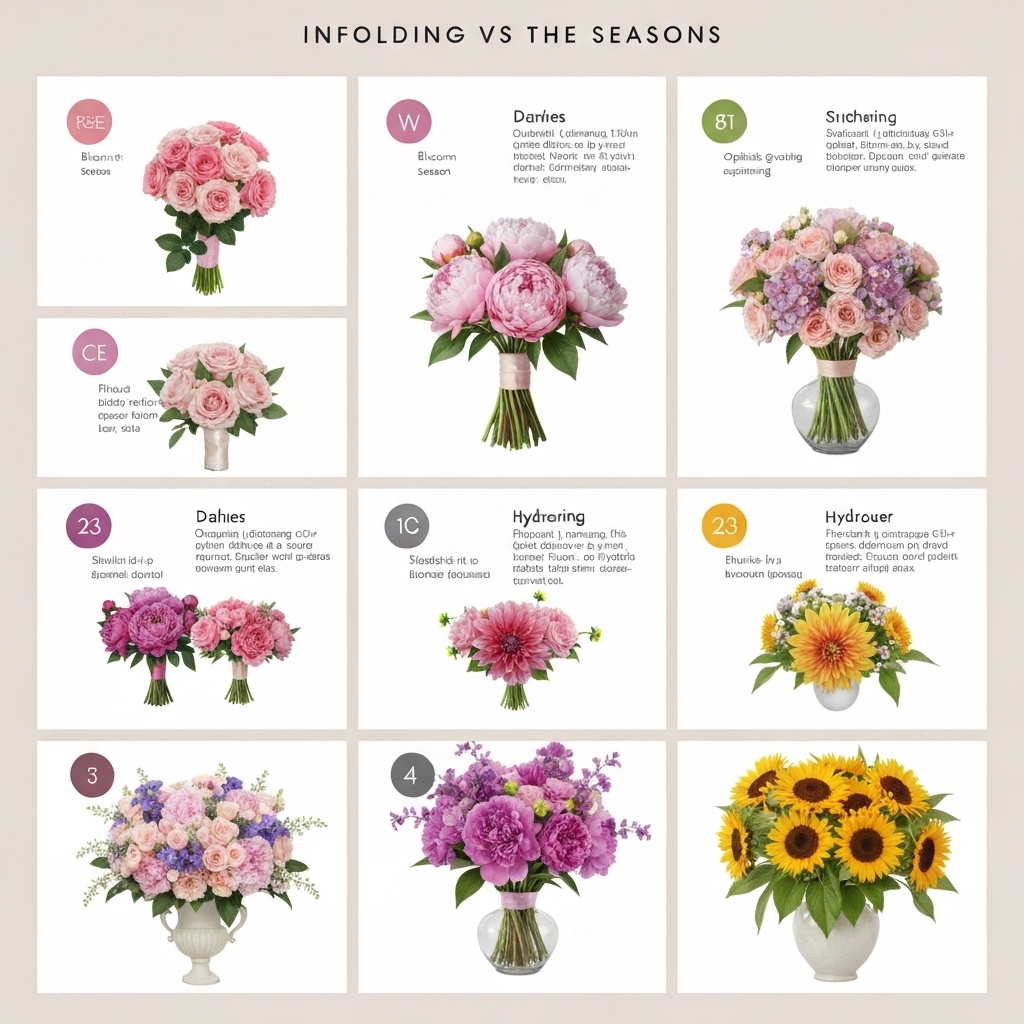
Choosing flowers that are in season at the time of your wedding is the single most effective way to reduce floral costs. Below is a comprehensive comparison of the most popular wedding flowers, including their typical growing season, relative cost, symbolic meaning, and practical notes.
| Flower | Peak Season | Cost Per Stem | Symbolic Meaning | Notes |
|---|---|---|---|---|
| Garden Rose | May–October | $3–$8 | Love, passion, beauty | Most popular wedding flower; wide colour range; available year-round but pricier off-season |
| Peony | April–June | $5–$12 | Romance, prosperity, good fortune | Short peak season; book early for spring/early summer weddings |
| Dahlia | July–October | $4–$8 | Elegance, commitment, inner strength | Bold statement flower; excellent for autumn weddings |
| Hydrangea | June–September | $4–$7 | Grace, gratitude, heartfelt emotion | Voluminous and cost-effective for large arrangements |
| Sunflower | July–September | $2–$4 | Adoration, loyalty, warmth | Budget-friendly; ideal for rustic and outdoor weddings |
| Lavender | June–August | $2–$4 | Devotion, calm, purity | Doubles as fragrance; dries beautifully for keepsakes |
| Lily (Oriental) | Year-round | $3–$6 | Purity, commitment, rebirth | Strong fragrance — check if guests have sensitivities |
| Tulip | March–May | $2–$4 | Perfect love, new beginnings | Best for spring weddings; wilts in heat |
| Lisianthus | Year-round | $3–$5 | Appreciation, charisma | Often used as rose alternative; similar look, lower cost |
| Ranunculus | March–May | $3–$6 | Radiant charm, attractiveness | Layered, romantic look; popular in boho and garden styles |
| Stephanotis | Year-round | $3–$5 | Marital happiness, good luck | Classic bridal flower; traditionally used in bouquets |
| Baby's Breath | Year-round | $1–$2 | Innocence, everlasting love | Affordable filler; having a resurgence in modern minimalist weddings |
| Eucalyptus | Year-round | $1–$3 | Protection, abundance, beauty | Popular greenery; adds texture and scent; very versatile |
| Carnation | Year-round | $1–$2 | Pure love, admiration | Deeply underrated; durable and budget-friendly |
Pro tip: Tell your florist your budget first, then discuss which flowers achieve your aesthetic within that number. An experienced florist will substitute expensive blooms with lookalike alternatives — for example, lisianthus instead of garden roses, or ranunculus instead of peonies — without sacrificing the look you want.
Wedding Bouquet Styles
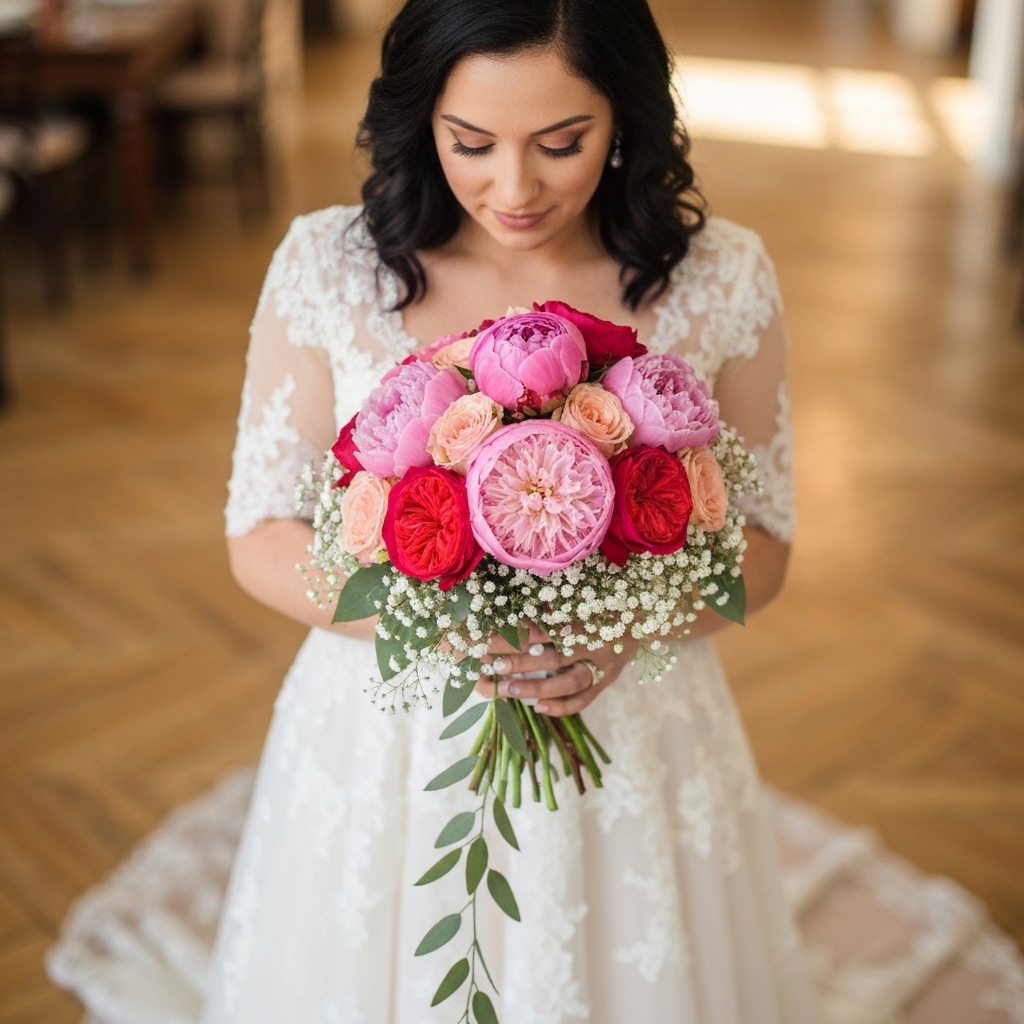
Your bridal bouquet is the most photographed floral element of your wedding. The style you choose should complement both your dress silhouette and your wedding's overall aesthetic.
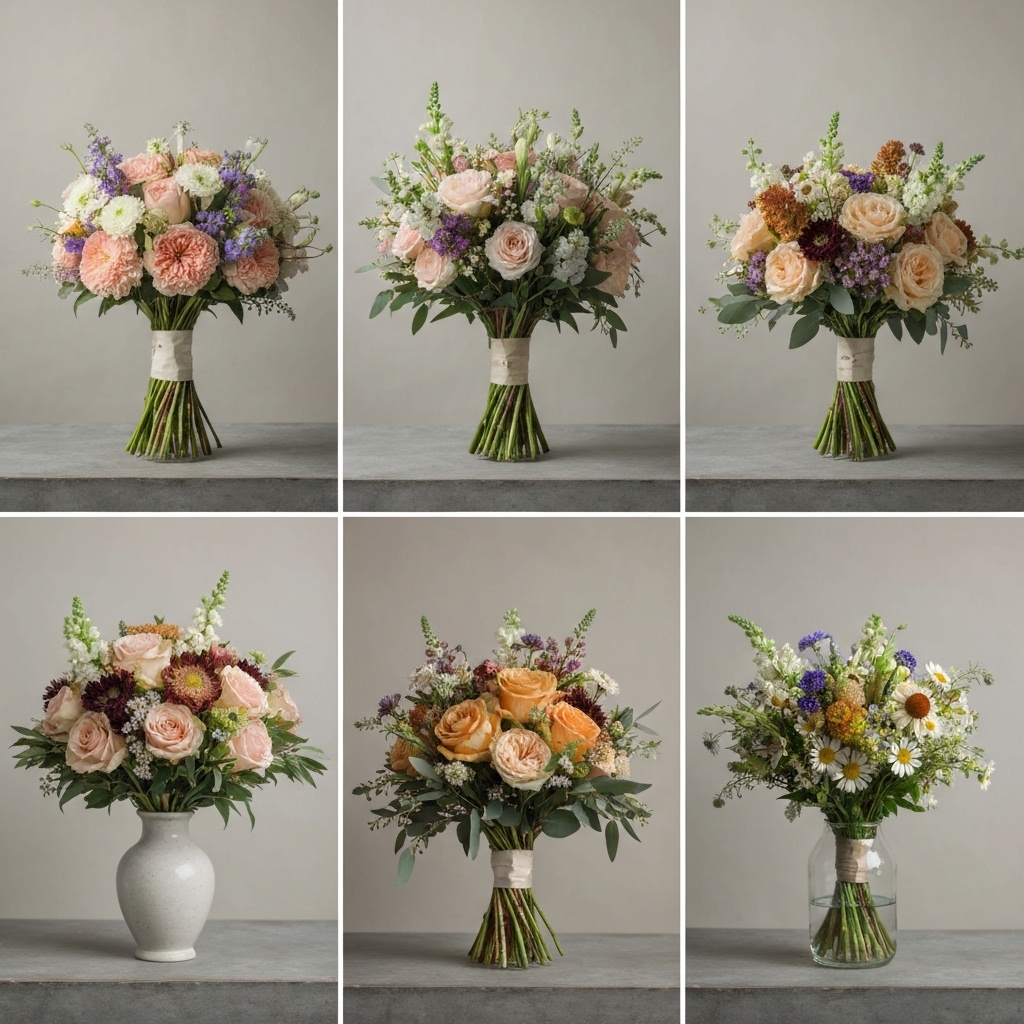
Round / Dome Bouquet
The most popular bridal bouquet style. Flowers are gathered into a tight, rounded shape. It works with almost every dress style and venue type. Garden roses, peonies, and ranunculus are particularly suited to this style.
Best for: Ball gowns, A-line dresses, classic and traditional weddings.
Cascading / Waterfall Bouquet
Flowers trail downward in an elongated, flowing shape. It creates a dramatic effect but requires more flowers (and therefore costs more). It was the classic style of the 1980s and has seen a modern revival with organic, loose interpretations.
Best for: Fitted gowns, princess silhouettes, formal and black-tie weddings.
Posy Bouquet
A small, informal version of the round bouquet. It's simple, manageable, and works beautifully for intimate weddings or as a complement to a statement dress. Often chosen as the bridesmaids' bouquet style.
Best for: Elopements, civil ceremonies, cocktail attire weddings.
Loose / Hand-Tied Bouquet
Stems are gathered loosely and wrapped in ribbon or twine. It has a garden-picked, organic feel. This is the dominant style in contemporary wedding photography.
Best for: Rustic, garden, boho, and relaxed outdoor weddings.
Arm Sheaf / Presentation Bouquet
Flowers are cradled in the crook of the arm like a bundle rather than held by a stem wrap. Associated with pageant-style presentations but widely used in European wedding styles.
Best for: Tall brides, long-stemmed flowers (gladioli, calla lilies), fashion-forward aesthetics.
Wildflower Bouquet
A loose, textured arrangement of wildflowers, meadow grasses, and seasonal blooms. Highly seasonal and location-dependent, but extremely photogenic and often more affordable than structured designs.
Best for: Outdoor, countryside, garden, or festival-style weddings.
Ceremony Florals
Your ceremony florals create the backdrop for your most iconic photos. They guide the eye, frame the couple, and transform even a bare venue space into something memorable.
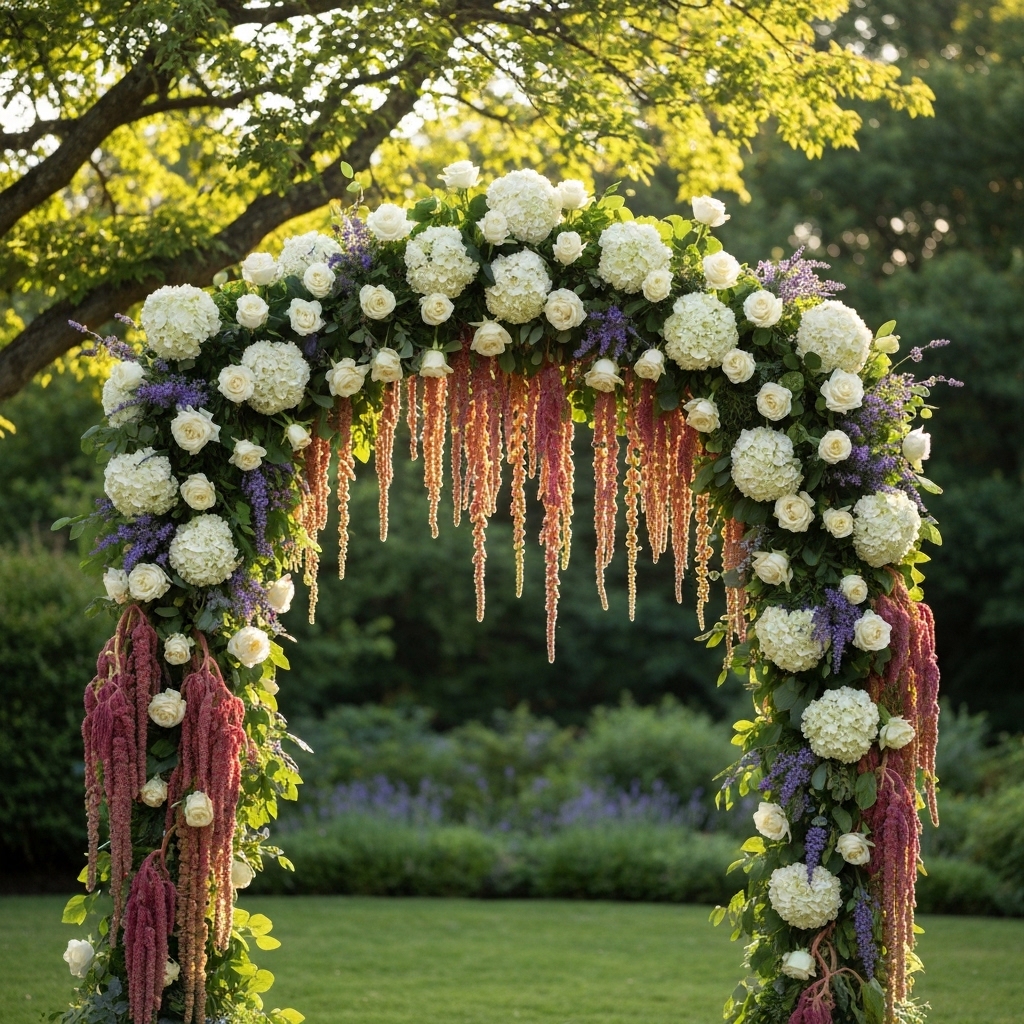
Altar and Ceremony Arch
The ceremony arch (or floral backdrop) is typically the highest-budget floral element. It can range from a simple greenery frame ($500–$800) to a fully packed floral arch with premium blooms ($2,500–$5,000+). The key factors driving cost are:
- Coverage density: A lush, fully covered arch uses 3–5× the flowers of a loose, organic arch
- Height and scale: Larger arches require more materials and more assembly time
- Flower variety: All-white roses cost more than a mixed greenery arch
If budget is a constraint, consider a half-arch (flowers on one side only) or a decorated arbour with focused floral clusters rather than full coverage. This can achieve a similar visual impact at 40–60% of the cost.
Aisle Décor
Aisle markers can be pew end arrangements, chair-tied blooms, lanterns with floral accents, or petals on the ground. Budget $25–$80 per marker. For a 20-row ceremony with markers on every other row, you're looking at $250–$800 for this element alone.
Ceremony Signing Table
A small bud vase arrangement or low floral cluster ($50–$150) makes the signing table feel considered without a large spend.
Flower Girl Petals
Fresh petal cones or baskets run $30–$80. Freeze-dried rose petals are a popular alternative — they hold their colour beautifully and cost around $30–$50 for a generous supply from suppliers like Amazon (premium freeze-dried rose petals).
Reception Florals
Reception florals cover more surface area than ceremony florals and often represent the largest single line item in a floral budget. Planning them carefully is essential.
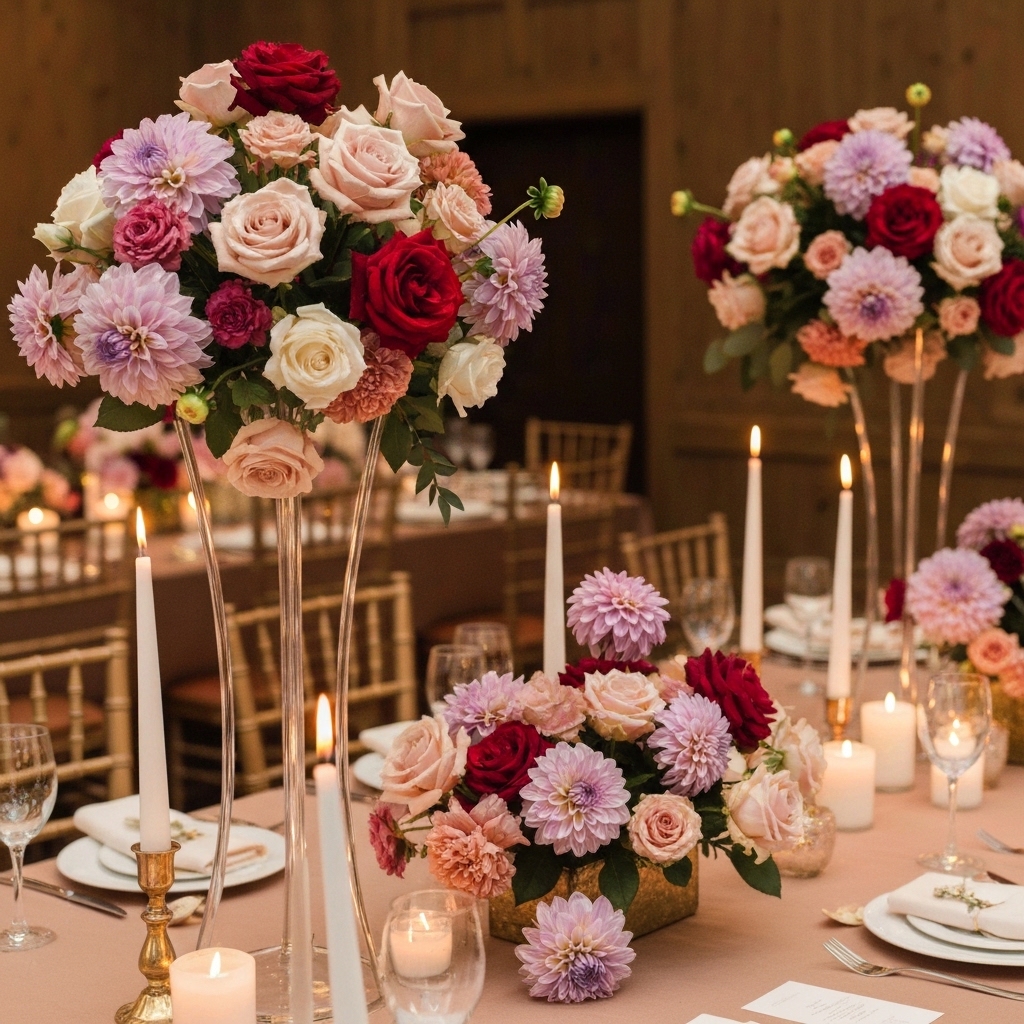
Centrepieces
You have two main options for reception table centrepieces:
Low centrepieces: Arrangements that sit below eye level, keeping sight lines open across the room. They're typically less expensive ($75–$200 each) and work well in intimate venues or when you want a relaxed, garden feel.
Tall centrepieces: Statement arrangements on tall stands that create drama and height variation across the room. They cost more ($150–$500+ each) but read beautifully in large ballroom settings and in photos from above.
A popular cost-saving strategy is to mix tall and low centrepieces — perhaps tall arrangements on every third table — which creates visual variety at a lower average cost per table than tall centrepieces throughout.
The maths matters: If you have 15 reception tables and choose low centrepieces at $120 each, that's $1,800 before delivery. Upgrade to tall centrepieces at $300 each and you're at $4,500. Know your table count before discussing centrepiece options.
Head Table Florals
Your head or sweetheart table should feel elevated relative to guest tables. A floral runner down the centre of the table, combined with low bud vases, creates a lush look. Budget $200–$800 depending on length and density.
Bar and Cocktail Hour Arrangements
Floral arrangements on bars, cocktail tables, and escort card tables add to the guest experience during the pre-dinner period. These are often scaled-down versions of reception arrangements. Budget $50–$120 per arrangement.
Cake Flowers
Fresh flowers on a wedding cake must be food-safe and placed by your florist (not the baker, unless they have floristry experience). Discuss this with both your florist and your baker early. Budget $80–$250 for cake florals.
Powder Room Arrangements
A small, fresh arrangement in the venue powder room is a thoughtful touch that often surprises and delights guests. A simple bud vase arrangement ($40–$80) is enough.
To make sure your reception florals fit the overall budget, run the numbers alongside your full planning spreadsheet — our wedding budget template can help you track every floral line item.
How to Book a Wedding Florist
Finding the right florist is about more than portfolio aesthetics. It's about working with someone who understands your vision, communicates clearly, and can deliver reliably on the day.
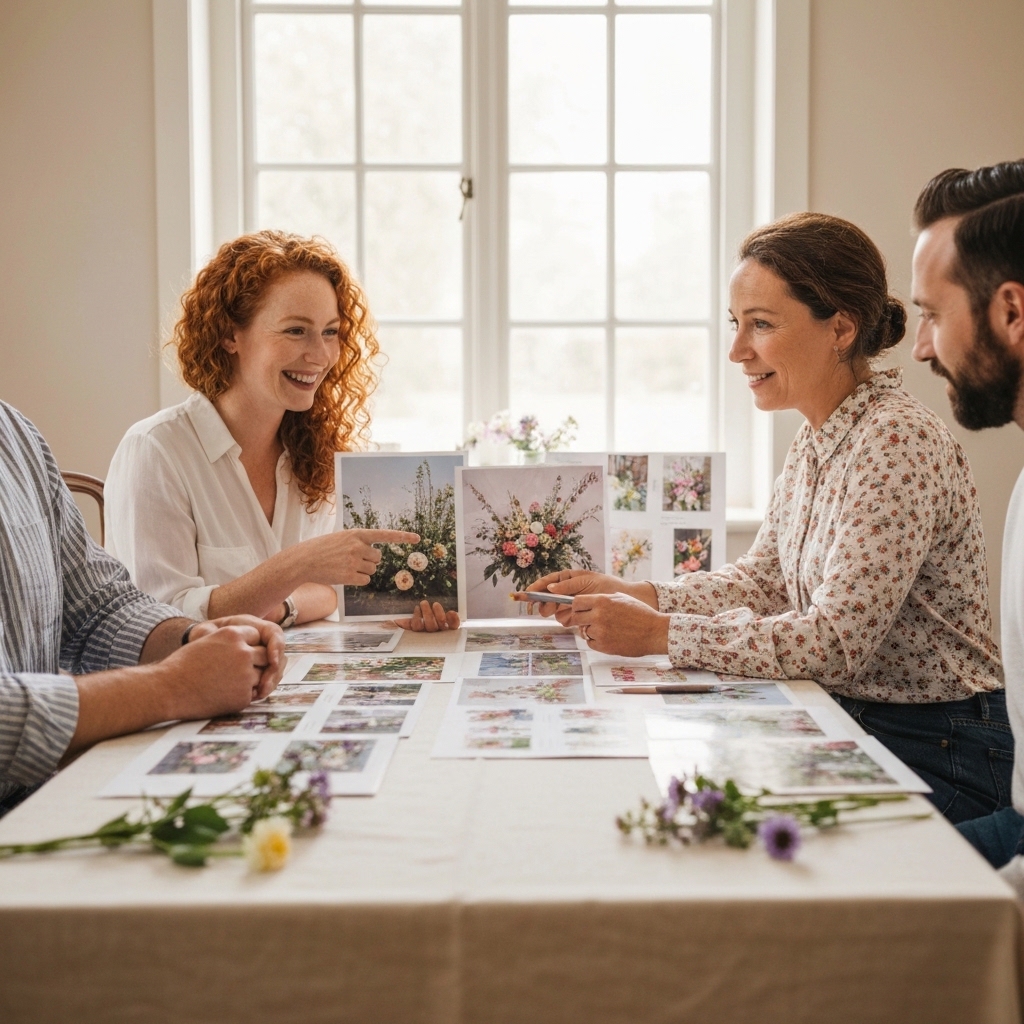
Step 1: Define Your Aesthetic Before You Start
Before contacting florists, spend time building a visual reference. Pinterest boards, Instagram saves, and magazine tear-outs all work. Being able to show a florist "this is what I want" in visual terms is far more effective than trying to describe it in words.
Identify your:
- Colour palette (not just "pink" — blush? hot pink? dusty rose?)
- Overall aesthetic (classic, romantic, garden, boho, modern, minimalist, maximalist)
- Must-have flowers vs. general vibe
- Flowers you actively dislike or want to avoid
Step 2: Research Local Florists
Start with:
- Wedding directories: WeddingWire, The Knot, and Zola all have searchable florist directories with reviews
- Instagram: Search by location hashtags (#[yourcity]weddingflorist, #[yourcity]wedding)
- Venue referrals: Your venue likely has preferred or recommended florists who know the space
- Other vendors: Your photographer or planner will have worked with local florists and can give candid recommendations
Step 3: Request Quotes From 3–4 Florists
Don't rely on a single quote. Contact three to four florists and provide the same brief to each:
- Wedding date and venue
- Guest count and approximate number of tables
- List of floral elements you need (bridal bouquet, bridesmaids, ceremony arch, centrepieces, etc.)
- Your colour palette and style reference images
- Your total floral budget
Some florists will decline to quote if your budget doesn't match their minimum. That's useful information — it means you're not wasting each other's time.
Step 4: Evaluate Quotes Properly
A lower quote isn't always better. Compare:
- What's included: Are delivery and setup included, or are they add-ons?
- Substitution policy: Will they tell you in advance if a bloom isn't available?
- Breakdown of costs: Can they show you a per-item breakdown?
- Contract clarity: Are delivery times, setup responsibilities, and cancellation terms clearly stated?
Step 5: Book Early
Top florists in popular wedding markets book out 10–14 months in advance for peak season dates. If your wedding is in May, June, September, or October, aim to confirm your florist at least 9–12 months out. For winter or weekday weddings, 6 months may be sufficient.
A deposit of 20–30% is standard to secure your date, with the balance typically due 2–4 weeks before the wedding.
Using Wedding Planning Apps to Stay Organised
Once you've booked your florist, keeping your florals brief organised alongside all your other vendors pays dividends. Tools like Zola and The Knot have vendor contact and budget tracking features. For a broader toolkit comparison, see our guide to the best wedding planning apps for 2026.
DIY Wedding Flowers
DIY wedding florals can save 40–60% compared to hiring a professional florist. For the right couple, with the right wedding size and support network, it's genuinely achievable.
When DIY Works
- Small guest count (under 50): Fewer tables means fewer centrepieces. The workload is manageable.
- Simple arrangements: Bud vases, single-stem centrepieces, loose hand-tied posies, and petal cones are all achievable for a confident beginner.
- Someone else handles day-of logistics: You cannot arrange flowers and get married on the same day without help. Recruit a reliable team of friends or family members to handle assembly and setup.
- You have access to wholesale flowers: Supermarket flowers work for basic arrangements, but wholesale markets (or online wholesalers) dramatically reduce per-stem costs. Many cities have flower markets open to public buyers on weekday mornings.
When DIY Doesn't Work
- Your bridal bouquet: Your bouquet will be held for hours, photographed hundreds of times, and needs to stay fresh all day. Professional wiring, taping, and conditioning techniques matter. Consider hiring a florist for your bouquet specifically, even if you DIY everything else.
- Structural installations: Altar arches, hanging florals, and suspended arrangements require wiring, structural knowledge, and equipment. These are not beginner projects.
- Venues with early access restrictions: If your venue only allows setup from 2 hours before the ceremony, DIY flowers can become a frantic, stressful nightmare.
What You'll Need for DIY
For a successful DIY floral project, invest in quality supplies. A good floral toolkit should include: floral shears, floral tape and wire, floral foam (for structured arrangements), flower food sachets, and clean buckets for conditioning. You can find complete kits on Amazon — look for professional floral supply kits that include scissors, wire, foam, and tape in one bundle.
For a full walkthrough of how to reduce total wedding spend without cutting quality, read our guide on how to plan a wedding on a budget.
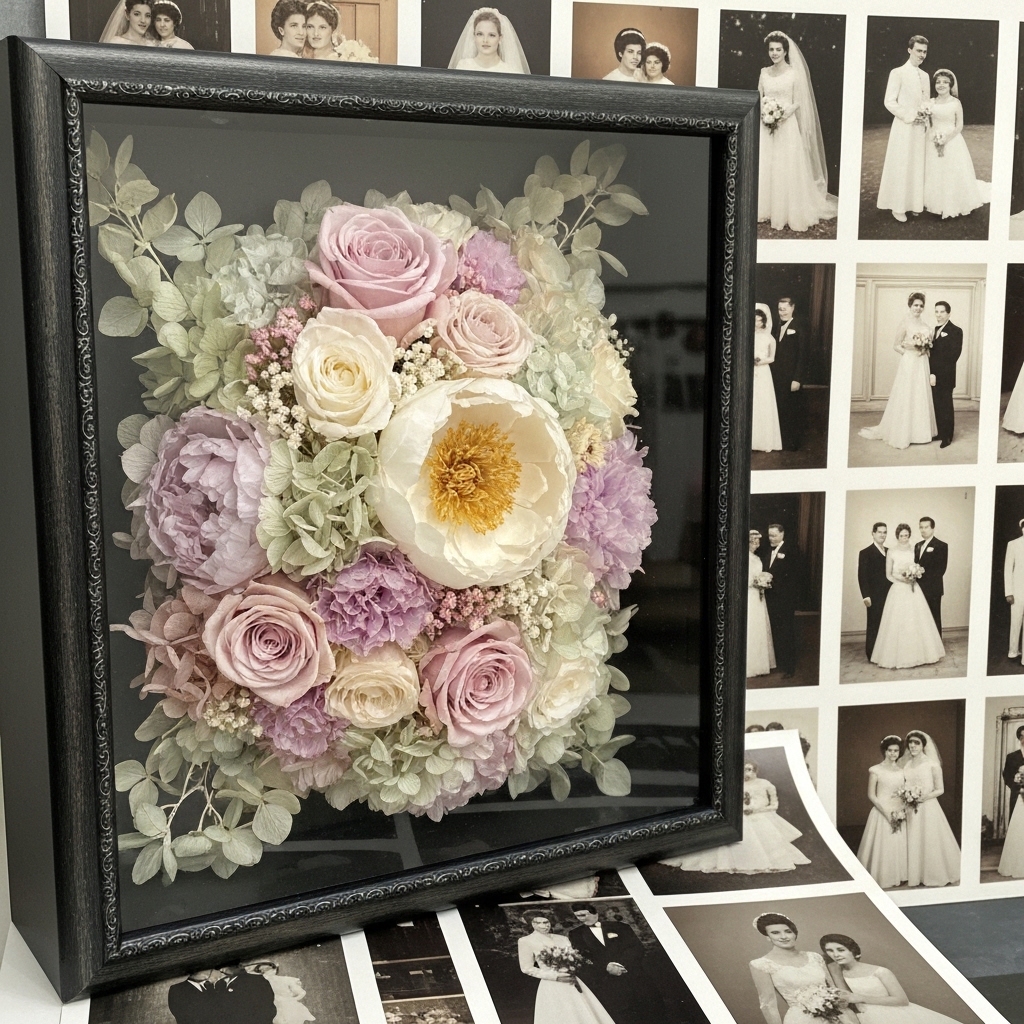
Preserving Your Wedding Bouquet
Your bridal bouquet will last a full wedding day if it's been properly conditioned by your florist. After the wedding, preservation lets you keep those blooms for years.
Air Drying
The most accessible method. Hang your bouquet upside down in a dry, dark room with good airflow for 2–3 weeks. Flowers will shrink and some colour will fade, but the overall shape is preserved. Works particularly well with hardy flowers like roses, lavender, and dried-look varieties like statice.
Silica Gel Drying
Silica gel crystals draw moisture out of blooms faster than air drying (7–10 days) while preserving better shape and colour. You'll need a container large enough to submerge the flowers completely. Silica gel desiccant packets for flower drying are inexpensive and reusable.
Freeze Drying
Freeze drying produces the most lifelike results — preserved flowers retain their shape, colour, and texture remarkably well. It requires specialist equipment, so you'll need to send your bouquet to a professional freeze-drying service within 24–48 hours of the wedding. Costs typically range from $150–$400 depending on bouquet size.
Pressing
Individual blooms can be pressed between heavy books or in a purpose-built flower press and then framed or used in resin art. This works best for flat-faced flowers (pansies, daisies, small roses) rather than rounded, dense blooms.
Key tip: Whichever method you choose, begin the preservation process within 24 hours of your wedding. Fresh flowers preserve far better than wilted ones.
FAQ
How much should I budget for wedding flowers?
Most couples spend 8–10% of their total wedding budget on florals. For a $30,000 wedding, that's $2,400–$3,000. A full floral package including bridal bouquet, bridesmaids' bouquets, boutonnieres, ceremony arch, and reception centrepieces typically ranges from $2,500 to $6,000 for 100 guests. Luxury floral installations can exceed $15,000.
When should I book my wedding florist?
Book your florist 9–12 months before your wedding date, particularly for peak season (May–October) weddings. Top florists in popular markets book out a full year in advance. At minimum, secure your florist 6 months out to guarantee availability and allow adequate time for consultations and a style trial.
What are the cheapest wedding flowers?
The most budget-friendly wedding flowers include carnations ($1–$2 per stem), chrysanthemums ($2–$3 per stem), alstroemeria ($1–$2 per stem), baby's breath ($1–$2 per stem), and spray roses ($2–$3 per stem). Seasonal, locally-grown flowers always cost less than imported or out-of-season varieties. Greenery-forward arrangements also reduce stem costs significantly.
What flowers are in season for a summer wedding?
Summer wedding flowers (June–August) include garden roses, peonies (early summer), sunflowers, dahlias, lavender, hydrangeas, lisianthus, and wildflowers. These are widely available in summer months, keeping costs lower than importing out-of-season blooms. Confirm local availability with your florist, as regional growing seasons vary.
Can I do my own wedding flowers to save money?
DIY wedding flowers can save 40–60% compared to hiring a professional florist and works best for small weddings (under 50 guests) with simple arrangements. You'll need to source flowers from a wholesale supplier 1–2 days before the wedding and recruit helpers for assembly. DIY is most achievable for table centrepieces, bud vases, and pew markers — but bridal bouquets benefit from professional handling.
What is the difference between a florist and a floral designer?
A florist typically handles retail flower sales and standard arrangements. A floral designer specialises in large-scale event installations, complex arches, and full venue transformations. For elaborate floral concepts, a floral designer with wedding portfolio experience is the better choice, though they generally charge a higher creative fee.
How do I preserve my wedding bouquet after the wedding?
Common preservation methods include air drying (hang upside down for 2–3 weeks), silica gel drying for faster results with better colour retention, freeze-drying for the most lifelike results (requires a professional service), and pressing individual blooms for framing. Begin preservation within 24 hours of your wedding while flowers are still fresh.
Sources and Methodology
This guide draws on data from the following sources, which were current as of publication in April 2026:
-
WeddingWire / The Knot Newlywed Report (2025) — Annual survey of couples who married in 2024, covering average wedding spend by category including florals. Published by WeddingWire Inc., a subsidiary of The Knot Worldwide.
-
The Wedding Report (2025 Annual Statistics) — Independent wedding industry market research tracking vendor pricing, consumer spending trends, and category breakdowns across US markets. Available at theweddingreport.com.
-
Society of American Florists (SAF) — Wedding Flower Consumer Study (2024) — Industry association data on average floral spend per wedding, florist booking timelines, and popular flower varieties. Published by SAF, the US national trade association for the floral industry (safnow.org).
-
British Florist Association — Seasonal Flower Guide (2025) — Reference guide on UK and North American seasonal flower availability, growing periods, and wholesale pricing benchmarks. Published by the BFA (britishfloristassociation.org).
-
Journal of Consumer Psychology — Floral Preferences and Emotional Response in Ceremonial Settings (2023) — Peer-reviewed study examining how floral choices influence emotional experience and memory formation in ceremonial events. Volume 33, Issue 2.
-
USDA Agricultural Marketing Service — Cut Flower Imports and Domestic Production Data (2024) — Federal data on US flower import volumes, country of origin, and pricing patterns for roses, carnations, and tropical varieties. Available at ams.usda.gov.
Pricing estimates in this article reflect 2025–2026 US market averages and will vary by region, florist, and season. Always obtain multiple quotes for your specific wedding requirements.
Plan Your Entire Wedding Alongside Your Flowers
Your florals don't exist in isolation — they're one piece of a larger planning puzzle. If you're working through your full wedding plan, these guides will help:
- Wedding Planning Checklist — A month-by-month breakdown of every task from engagement to honeymoon
- Wedding Planning Timeline — When to book each vendor, including your florist
- How to Choose a Wedding Venue — Your venue determines how your flowers are installed and displayed
For home organisation and hosting inspiration that carries through from wedding to married life, Home Organization Guide has practical resources for your new household.
About the Author
Sophie Clarke, Certified Wedding Planner
Sophie Clarke is a Certified Wedding Planner (CWP) with over a decade of experience coordinating weddings across the US and Australia. She has worked alongside award-winning florists on weddings ranging from intimate elopements to 400-guest ballroom celebrations. Sophie writes for Start Wedding Planning to help engaged couples navigate the planning process with confidence, clarity, and less stress. Her philosophy: every couple deserves a wedding that feels like them — not like a template.
Ready to plan with less stress?
Our Complete Wedding Planning Tracker has 247 tasks, a 12-month countdown, and vendor contact hub, all in one spreadsheet.
Get the Tracker - $27 →